

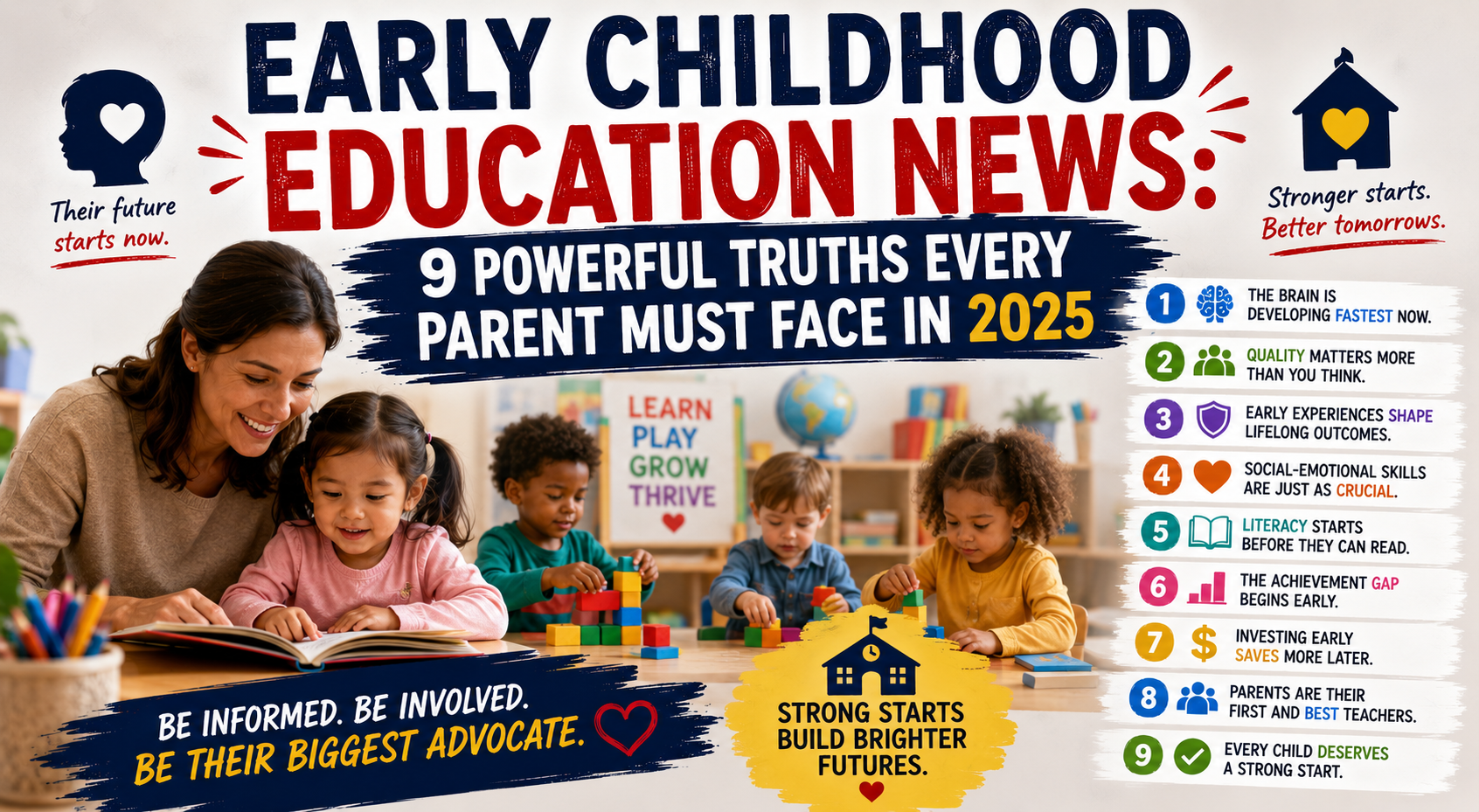
Early childhood education news — honestly, most parents scroll past it. Too dense, too political, too far removed from the actual chaos of morning routines and school drop-offs. But here’s the thing nobody says out loud: the budget fights happening right now, the teacher leaving her classroom for the last time this Friday, the state legislature voting on a preschool bill next week — all of that lands directly on your child. Sooner than you think.
Five years. That’s the window. Brain development between birth and age five moves at a pace that never returns. Miss that window and you’re not just behind — you’re working against biology for the rest of the child’s education. So yeah. This matters. Let’s actually get into it.
Early Childhood Education News Shows a System Under Real Pressure
Spend a few weeks reading early childhood education news and a pattern emerges that nobody’s connecting for you. A Head Start center closes in Ohio. A study drops showing kindergarten readiness scores declining. A state cuts its preschool budget by twelve percent. Three separate stories. Same problem.
The evidence has been consistent for thirty years — invest before age five, get returns that no later spending can replicate. Nobel economist James Heckman has been saying it for decades with data behind every word. And still, the funding doesn’t reflect it. The workforce doesn’t reflect it. The political conversation barely touches it. That gap between what we know and what we actually do — that’s the real early childhood education story in 2025.
Budget Cuts Are Closing the Doors Families Depend On
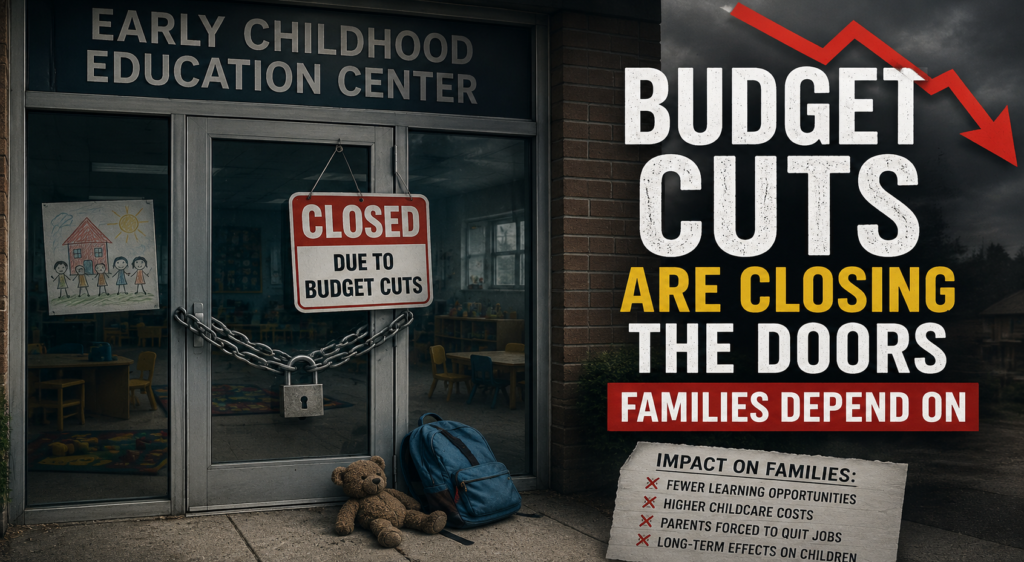
Head Start has kept early childhood access alive for low-income families since 1965. Right now it’s bleeding. Centers reducing hours, trimming enrollment, some shutting quietly with no fanfare, no coverage, just a locked door where a preschool used to be.
A real child loses something concrete when that happens. Two years of language-rich, structured developmental experience — gone. That child walks into kindergarten already behind classmates who had access. Not because of anything the child did. Because someone in a budget meeting made a different call. For more on how funding authority shapes what programs actually survive at the community level, this piece on education achievement authority lays out the mechanics pretty clearly.
Play Won. The Academic Preschool Experiment Failed.
Here’s genuinely good early childhood education news and it deserves to be said without burying the lead. The push to move academic content earlier — letters at three, reading readiness drills at four — produced worse outcomes than the play-based approach it replaced. More anxious kids. Weaker social development. Minimal long-term academic gain. The research came back and the verdict was not close.
Finland kept playing. Their kids kept thriving. Meanwhile early childhood programs across the US were drilling four-year-olds on phonics and wondering why kindergarten teachers were reporting kids who couldn’t sit still, share, or handle frustration. Play builds the regulation skills, the social skills, the patience and creativity that actually carry a child through formal schooling. A worksheet never did any of that.
Teachers Are Walking Out and the Field Is Losing Its Best People
Nobody wants to write this part of early childhood education news but it needs writing. The educator workforce is in genuine crisis and the reason is simple enough to fit on a protest sign — the pay is insulting relative to the work.
A qualified early childhood educator managing twelve toddlers, tracking developmental milestones for each one, running daily reports, maintaining licensing ratios, and communicating with parents earns less than someone scanning groceries in most American states. That’s not rhetorical. It’s documented. The people who stay do it because they love children deeply, which is beautiful, but love doesn’t fix a broken system. Classrooms run understaffed. Ratios get stretched. Children in their most sensitive developmental window absorb every consequence of that instability.
Screen Time Panic Is Giving Way to Actual Nuance
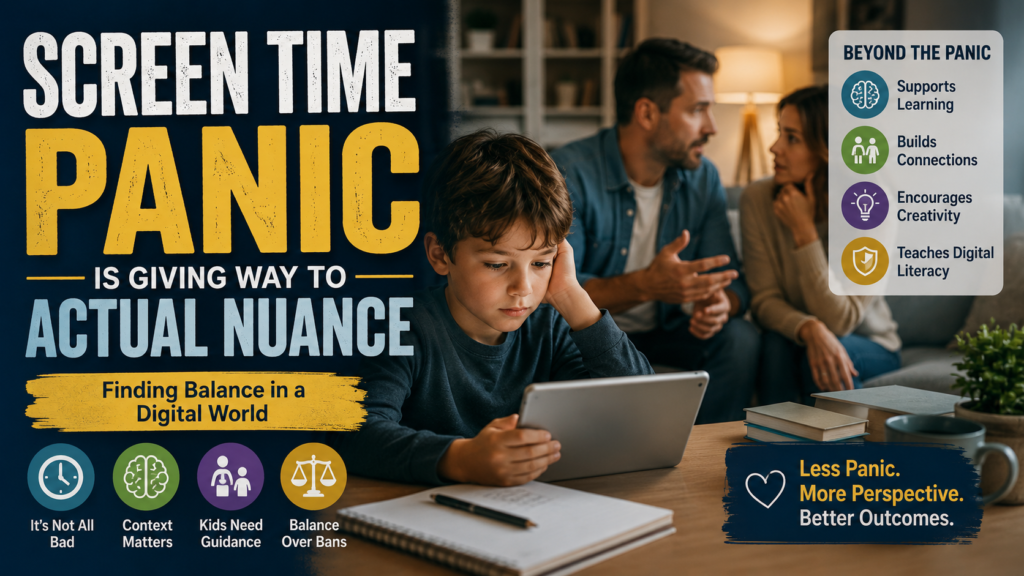
The early childhood education news cycle on screens has been exhausting for parents. One study says twenty minutes of television causes attention disorders. Another says educational apps are fine. A pediatrician says no screens before two. Another says context matters. Who’s right?
Here’s where the research is actually landing. Passive, fast-paced content consumed alone for long stretches does appear to affect attention development in very young children — that concern had real basis. But a video call with grandparents, a slow educational program watched with a parent sitting next to the child, an interactive app used together — minimal negative effects. The screen was never the issue. What’s on it, how long, and whether a caring adult is present — those were always the variables. Parents needed that nuance three years ago. Better late than not at all. This guide on resources for distance learning covers how digital tools are being used thoughtfully in early education settings.
The Inequality Starts Before Kindergarten Begins
Say it plainly because early childhood education news rarely does. Wealthy families buy developmental advantage before their child ever sets foot in a public school. Low-income families cannot. The gap that shows up in third grade reading scores didn’t start in third grade. It started at age three in a preschool — or the absence of one.
Private preschools with trained teachers, low ratios, enriched materials, outdoor spaces, and developmental programming cost more per month than many families earn in a week. Subsidized alternatives carry waitlists measured in years, not months. Children from low-income households arrive at kindergarten having heard millions fewer words, having had dramatically fewer structured developmental interactions, having experienced far less of what a developing brain needs during those critical years. The system is producing inequality before the first report card ever gets written.
A Few States Stopped Waiting and Started Building
Not everything in early childhood education news is grim and this section deserves its space. New Mexico launched genuine universal pre-K. Colorado put serious money behind expanded early childhood access. Vermont has been investing long enough that outcome data is becoming hard for skeptics to dismiss.
What separates these states is how they categorize early childhood education. Not charity. Not social welfare. Infrastructure — the same bucket as roads, clean water, and public safety. When the framing shifts, the funding stability shifts with it. Programs stop getting cut every time a budget gets tight because cutting infrastructure carries political cost. Other states are watching. Some are starting to move. That’s real progress in a space that doesn’t get enough of it.
Parent Involvement Is the Variable Programs Can’t Replace
Every serious researcher lands here eventually. Early childhood education news focuses heavily on curriculum, funding, and teacher quality — all of which genuinely matter — but parent engagement predicts outcomes in ways program design alone cannot replicate. Programs that treat parents as active partners outperform programs that treat them as drop-off points. Consistently. Across different demographics, different program models, different states.
This isn’t about turning every parent into a home educator. Read together before bed. Have real conversations in the car. Ask what happened at school and actually listen to the answer. Stay emotionally present in a consistent way. Free. Powerful. And dependent on parents having enough stability — financial, emotional, work flexibility — to show up that way. Supporting parents means supporting children. The programs that understand this produce better outcomes. Full stop.
Neuroscience Is Quietly Rewriting Early Childhood Practice
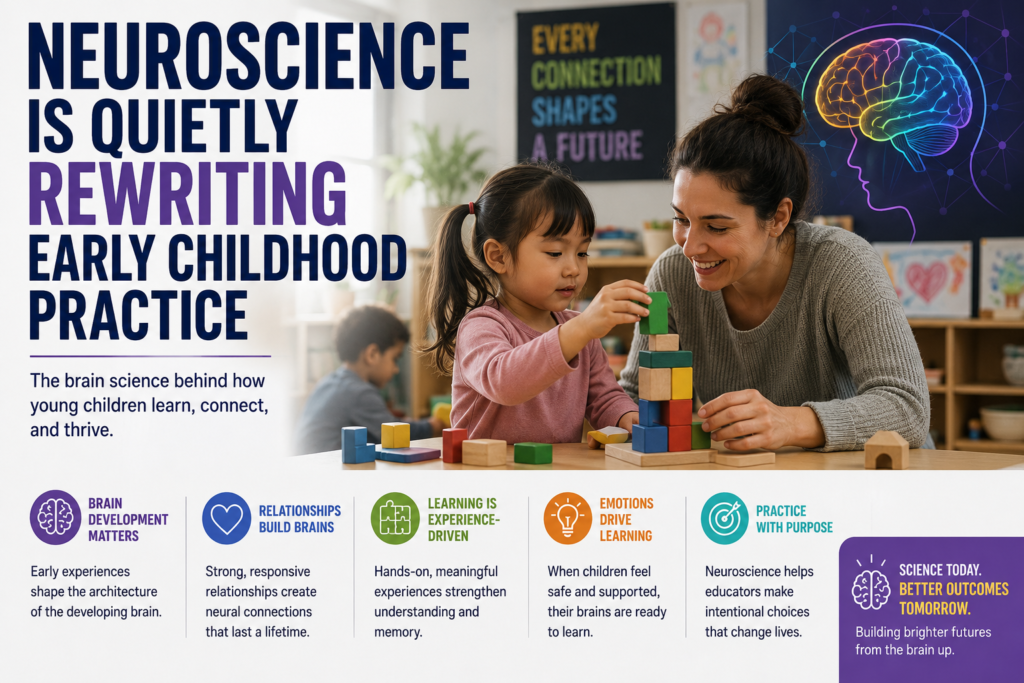
The brain research coming out of early childhood development rarely makes early childhood education news headlines but it is reshaping how serious programs operate at the ground level. What we now understand about neural development between birth and five is changing how educators talk to toddlers, how classrooms are designed, how stress in early environments gets addressed.
Serve-and-return interactions — the conversational back-and-forth between caregiver and child — build neural connections at a rate that drops sharply after age five. Chronic early childhood stress physically alters brain architecture in ways that affect learning, behavior, and health for decades afterward. Not metaphorically. Structurally. These findings make the case for early childhood investment with a clarity that policy arguments rarely achieve. Current state-by-state data and research is tracked by the National Institute for Early Education Research if you want the numbers behind any of this.
What All of This Early Childhood Education News Actually Adds Up To
Step back from the individual stories and the picture is clear. A society that has known for thirty years that early childhood investment is the highest-return educational spending available — and still chronically underfunds it. Still pays the workforce poverty wages. Still allows access to vary wildly by zip code and family income. Still treats it as optional rather than essential.
The science didn’t fail. The communication didn’t fail. The political will failed, repeatedly. What’s different in 2025 is that some states have stopped waiting for federal leadership and started building systems worth building. The research keeps getting stronger. The economic case keeps getting clearer. And parents who understand what these years actually mean are starting to ask louder questions of the people making decisions about them. For a closer look at how education funding priorities get shaped at the policy level, this overview of mcmahon education priorities supplemental provides useful context on how political decisions filter down to actual classrooms.
FAQ
What is the most pressing early childhood education news story in 2025?
Head Start funding pressure and the educator workforce shortage are the two issues most directly affecting access and program quality for families right now.
Is play-based learning actually more effective than academic preschool?
Yes, consistently. Research shows play builds stronger social, emotional, and cognitive foundations than early academic drilling for children under five years old.
Why are so many early childhood teachers leaving the profession?
Pay is the primary driver. Most early childhood educators earn well below a living wage despite holding professional training and managing serious developmental responsibility daily.
Does screen time genuinely harm young children?
Passive solo consumption in long stretches shows some attention effects in very young children. Screens used alongside an adult with quality content show minimal negative developmental impact.
Conclusion
Early childhood education news in 2025 tells a story that’s uncomfortable if you read it straight. Funding gaps widening. Teacher shortage deepening. Inequality in access growing before kindergarten even begins. None of that is invented and none of it is improving fast enough. But the science has never been sharper, some states are finally moving with real commitment, and the public understanding of why these earliest years matter is slowly — too slowly, but genuinely — catching up to what researchers have documented for three decades.
The window between birth and five doesn’t reopen. What gets built in that time, or what gets left unbuilt, shapes everything that follows. That conversation is happening right now. It deserves every bit of attention it can get.