

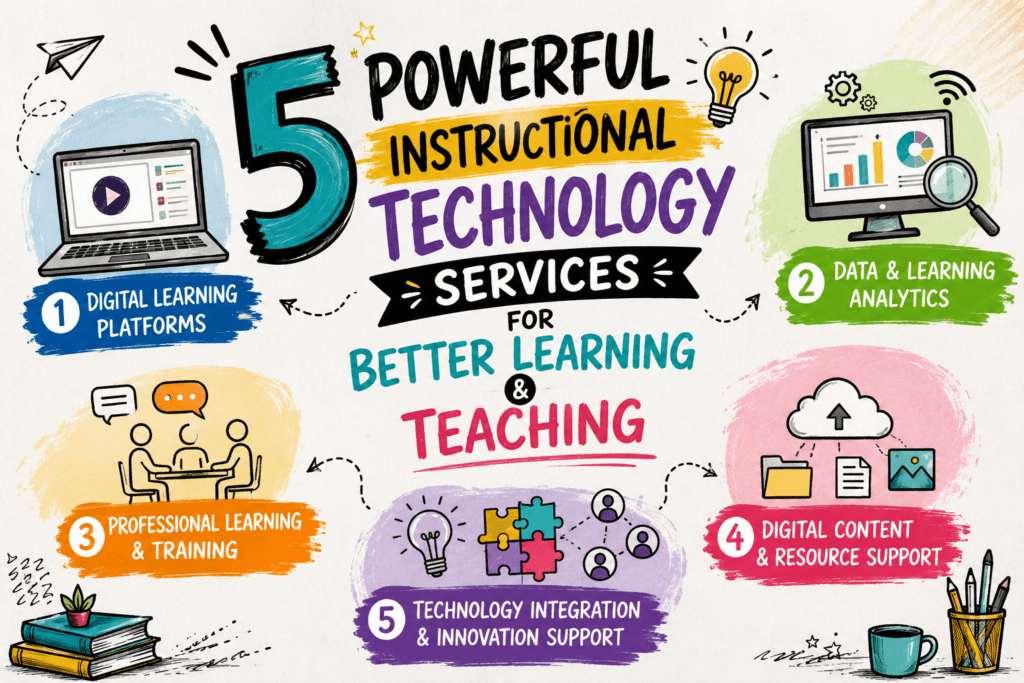
Education has never stood still, and the pace at which it is changing today is unlike anything seen in previous generations. Instructional technology services have moved from being optional enhancements to becoming essential infrastructure for schools, universities, corporate training departments, and independent educators around the world. The tools, platforms, and systems that fall under this category are now reshaping how knowledge is delivered, how learners engage with content, and how educators measure the effectiveness of their teaching. This article examines five powerful categories of instructional technology services that are making a measurable difference in learning outcomes and teaching quality across every level of education.
Digital Platforms Transform Learning
Learning management systems have become the backbone of modern education, giving institutions a centralized space where course content, assessments, communication, and progress tracking all live under one roof. Platforms like Canvas, Blackboard, and Moodle allow educators to build structured learning environments that students can access from anywhere, at any time, on virtually any device. This flexibility has been transformative for learners who face geographic, physical, or scheduling barriers that would otherwise prevent them from participating in formal education programs.
What makes these platforms particularly valuable as instructional technology services is their ability to collect and display data about student engagement and performance in real time. Teachers can see which students are falling behind, which assignments are causing confusion, and where the overall pace of a course needs adjustment. This data-driven approach to teaching replaces guesswork with evidence, allowing educators to make timely interventions that improve outcomes rather than discovering problems only after a student has already disengaged or failed an assessment.
Interactive Tools Engage Students
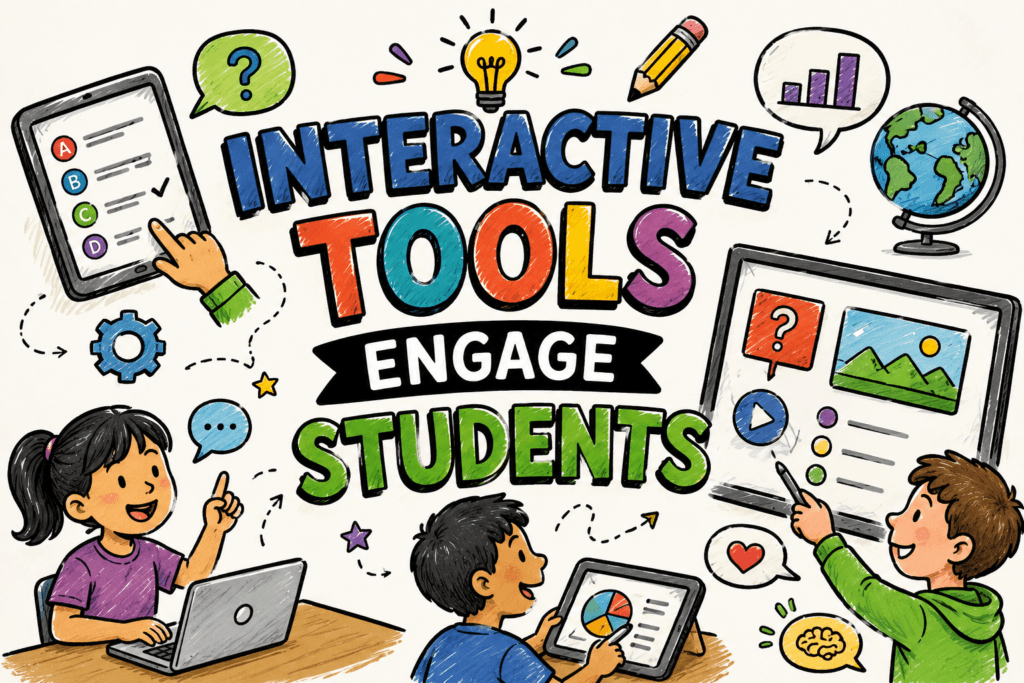
Engagement is one of the oldest and most persistent challenges in education, and instructional technology services have produced some genuinely effective solutions to this problem. Tools like Kahoot, Nearpod, and Pear Deck transform passive listening into active participation by embedding quizzes, polls, drawing activities, and discussion prompts directly into the flow of a lesson. Students who might drift during a traditional lecture find themselves pulled into the content because the format demands their ongoing attention and response.
The impact of interactive tools goes beyond keeping students awake. Research consistently shows that active learning, where students must retrieve, apply, and respond to information rather than simply receive it, produces stronger retention and deeper comprehension. When instructional technology services are designed around active learning principles, they do more than make class more enjoyable. They fundamentally change the cognitive work students do during a lesson, and that change has a direct and measurable effect on how much learning actually takes place and how long it lasts after the class ends.
Video Content Supports Instruction
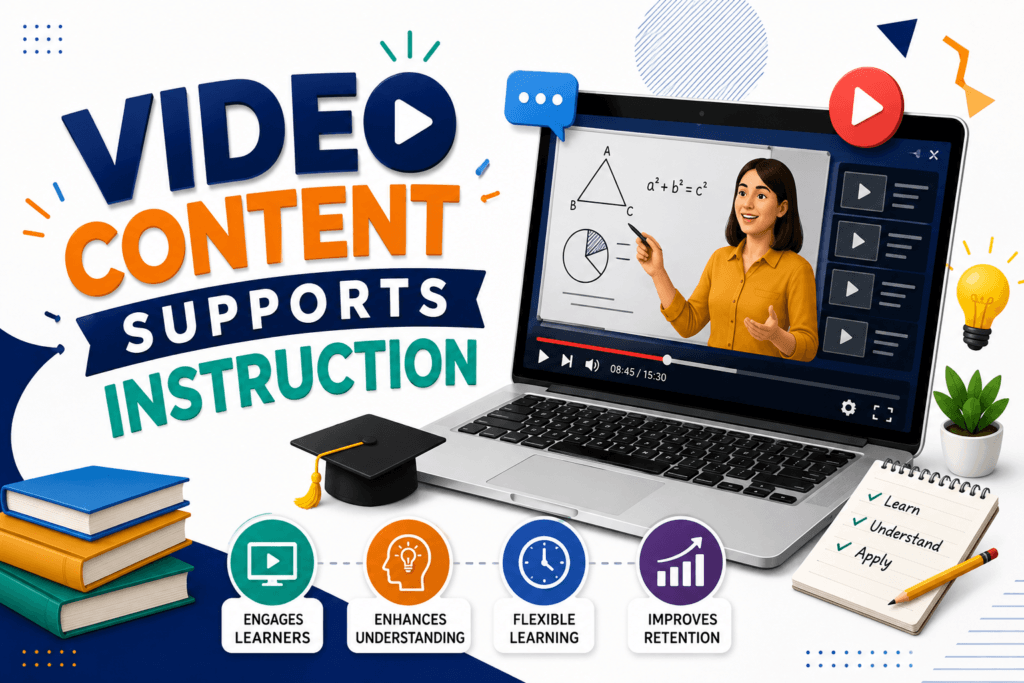
Video has established itself as one of the most powerful formats in instructional technology services, and its dominance shows no signs of fading. Recorded lectures, tutorial videos, animated explainers, and documentary-style content give educators the ability to present complex ideas in a format that learners can pause, rewind, and revisit as many times as needed. This control over pacing is something traditional classroom instruction cannot offer, and it makes video an especially valuable resource for students who process information at different speeds or who need multiple exposures to a concept before it clicks.
Platforms built specifically for educational video, such as Kaltura, Panopto, and even purpose-configured YouTube channels, allow institutions to build searchable video libraries that students can access throughout their academic journey. Instructors who record their lessons create a permanent archive that benefits not just current students but future cohorts as well. The investment in producing quality educational video pays dividends over time, and as production tools become more accessible and easier to use, the barrier to building a strong video content library continues to fall for educators at every level.
Assessment Technology Measures Growth
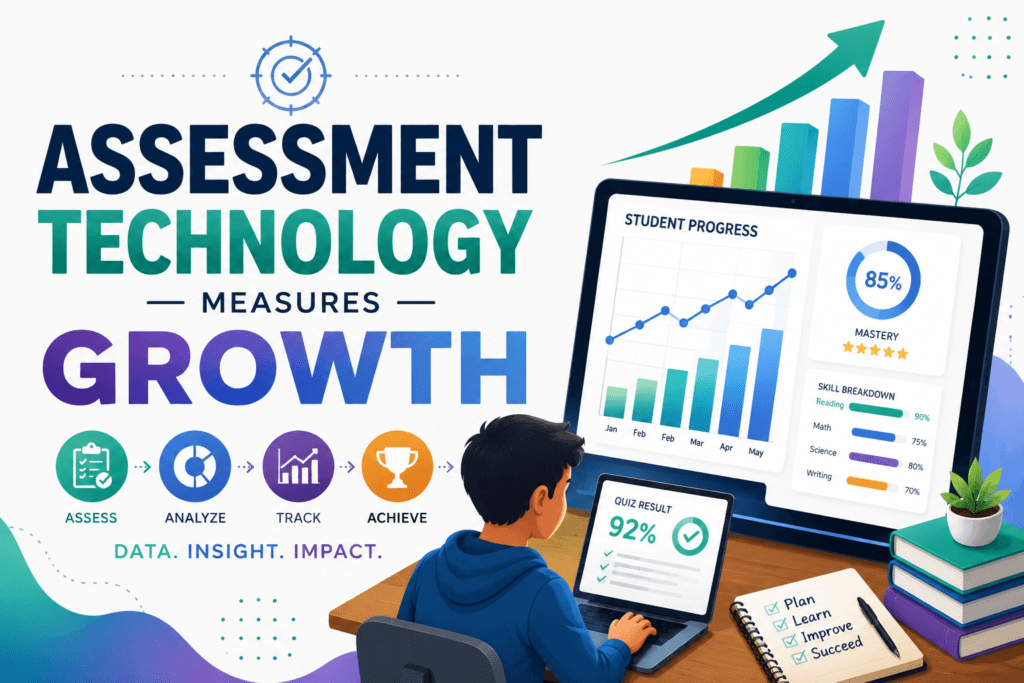
Traditional testing has significant limitations as a measure of genuine learning, and instructional technology services have produced assessment tools that address many of those limitations directly. Adaptive assessment platforms adjust the difficulty and focus of questions in real time based on how a student is performing, producing a more accurate picture of actual knowledge and skill than a fixed test can provide. Tools like Formative, Edulastic, and DeltaMath give teachers the ability to design assessments that are both rigorous and responsive to individual learner needs.
Beyond measuring what students know at a single point in time, modern assessment technology within instructional technology services can track growth over extended periods. Longitudinal data about student performance helps educators identify patterns that would be invisible in isolated test scores. A student who consistently struggles with a particular type of problem may need targeted intervention, while a student who shows steady improvement may need encouragement and more challenging material. Assessment technology turns the evaluation process from a judgment into a tool for continuous improvement, which serves both teachers and learners far more effectively.
Accessibility Tools Widen Reach
One of the most important contributions of instructional technology services to modern education is the expansion of access for learners who face barriers that traditional educational formats cannot accommodate. Text-to-speech tools, screen readers, captioning services, adjustable font sizes, high-contrast display options, and translation features collectively make educational content available to students with visual impairments, hearing differences, reading challenges, and language barriers. These tools do not represent a special accommodation for a minority of learners. They represent good design that benefits everyone.
Institutions that invest in accessibility-focused instructional technology services also benefit from the legal and reputational advantages of inclusive education. Accessibility compliance is a legal requirement in many jurisdictions, and schools or companies that fail to meet those standards face significant liability. Beyond compliance, there is a straightforward ethical case for making learning as accessible as possible. Knowledge should not be gatekept by the physical or linguistic circumstances of the learner, and accessibility technology is the most practical and scalable way to ensure that it is not.
Collaboration Software Builds Community
Learning is fundamentally a social activity, and instructional technology services that support collaboration recognize this in meaningful ways. Tools like Google Workspace for Education, Microsoft Teams for Education, and Slack allow students and educators to work together on documents, share feedback in real time, conduct group projects across distances, and maintain ongoing conversations about course content that extend well beyond the scheduled class period. This persistent connectivity changes the texture of the learning experience in ways that isolated individual study cannot replicate.
Collaborative technology also prepares students for the realities of modern professional environments where remote work, distributed teams, and digital communication tools are standard. When students use collaboration platforms as part of their education, they build both content knowledge and digital workplace skills simultaneously. Instructional technology services that embed collaboration into the learning process are therefore doing double duty, supporting academic achievement while also developing the practical competencies that employers across every industry increasingly expect from new graduates entering the workforce.
Gamification Motivates Consistent Effort
The application of game design principles to educational contexts, commonly called gamification, has become one of the more widely discussed areas within instructional technology services. Points, badges, leaderboards, progress bars, and achievement systems tap into the same psychological mechanisms that make games compelling and apply them to the less inherently exciting business of learning curriculum content. When students can see their progress visually represented and earn recognition for consistent effort, motivation tends to increase in ways that traditional grading systems rarely achieve.
Platforms like Classcraft, Duolingo, and various LMS plugins that add gamification layers to standard course structures have demonstrated that this approach can produce real engagement benefits, particularly for younger learners and for adult learners in corporate training environments. The key to effective gamification within instructional technology services is ensuring that the game mechanics reinforce genuine learning rather than rewarding superficial task completion. When the design is thoughtful, gamification does not trivialize education. It makes sustained engagement with challenging material more psychologically rewarding and therefore more likely to continue.
Artificial Intelligence Personalizes Pathways
Artificial intelligence has entered the field of instructional technology services in ways that are beginning to change what personalized learning actually means in practice. AI-powered platforms can analyze a learner’s performance data, identify specific gaps in knowledge, predict which concepts are likely to cause difficulty, and automatically adjust the sequence and pacing of content to match individual needs. This level of personalization was theoretically desirable for decades but practically impossible to deliver at scale without computational tools capable of processing large amounts of learner data quickly.
Systems like Carnegie Learning, Knewton, and AI-enhanced features within major LMS platforms are already demonstrating measurable improvements in learning efficiency when personalization is applied systematically. Students spend less time reviewing material they have already mastered and more time engaging with content at the precise edge of their current ability, which is where genuine learning growth takes place. As AI capabilities continue to develop, the personalization features available through instructional technology services will become more sophisticated, more accurate, and more integrated into the daily experience of both teaching and learning.
Professional Development Improves Teaching
Instructional technology services are not only for students. They play an equally important role in the ongoing professional development of educators, who need regular opportunities to build new skills, learn about emerging tools, and reflect on their teaching practice. Online professional development platforms, virtual coaching systems, peer observation tools, and digital portfolios for educators all fall within the category of instructional technology services aimed at improving teaching quality from the inside out.
When teachers have access to high-quality professional development delivered through well-designed technology platforms, they are better equipped to use instructional tools effectively with their students. The connection between educator professional learning and student outcomes is well established in educational research, and institutions that invest in instructional technology services for teachers as well as for students see compounding returns on that investment. Better-trained teachers use technology more effectively, design better learning experiences, and produce stronger student results, creating a cycle of improvement that benefits every stakeholder in the educational system.
Data Analytics Informs Decisions
The capacity to collect, analyze, and act on data is one of the defining features of modern instructional technology services, and it represents a fundamental shift in how educational decisions are made. Rather than relying primarily on intuition, experience, or anecdotal observation, educators and administrators who use data analytics tools can ground their decisions in evidence drawn from actual learner behavior and performance. Dashboards that display attendance patterns, assignment completion rates, assessment scores, and engagement metrics give decision-makers a comprehensive picture of what is happening across an entire institution.
Data analytics within instructional technology services also supports early intervention in ways that were previously impossible at scale. When a system flags a student who has missed three consecutive assignments or whose quiz scores have dropped significantly over two weeks, a counselor or teacher can reach out before the situation deteriorates further. This proactive approach to student support, made possible by data technology, has been shown to improve retention rates and reduce dropout numbers at institutions that implement it thoughtfully and consistently.
Content Authoring Enables Customization
Off-the-shelf educational content rarely fits the specific needs of any particular group of learners perfectly, and instructional technology services have addressed this through the development of powerful content authoring tools. Platforms like Articulate Storyline, Adobe Captivate, and H5P allow educators and instructional designers to build custom interactive content that aligns precisely with their curriculum goals, their learners’ prior knowledge, and their institutional context. This ability to produce tailored content at a professional level without requiring deep programming expertise has democratized instructional design significantly.
Custom content built with authoring tools can incorporate branching scenarios, embedded assessments, multimedia elements, and interactive simulations that make abstract concepts tangible and immediately applicable. For vocational training, corporate learning, and specialized academic programs, this kind of custom content is not a luxury. It is a necessity because the specific knowledge and skill sets being taught simply do not exist in any commercially available package. Instructional technology services that include robust content authoring capabilities give educators the creative control they need to build learning experiences that genuinely serve their specific audiences.
Virtual Reality Changes Experiences
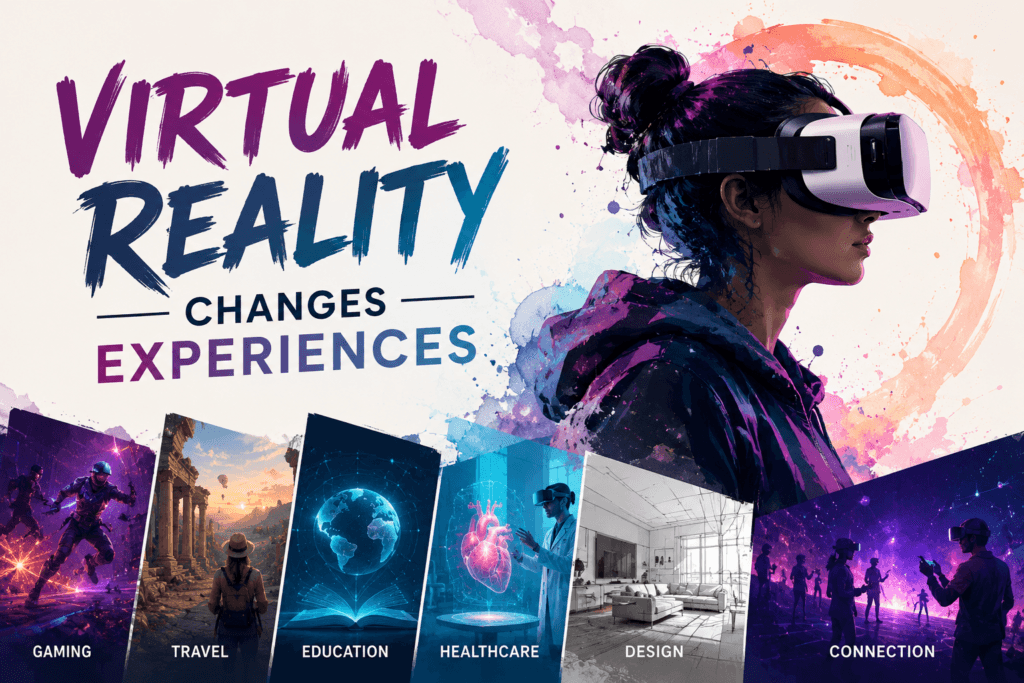
Virtual reality and augmented reality have moved from experimental novelties to legitimate instructional technology services with documented applications in medical training, engineering education, historical studies, and skills-based vocational programs. The ability to place a learner inside a simulated environment where they can practice procedures, observe processes, and interact with three-dimensional representations of complex systems offers a quality of experiential learning that no textbook or video can replicate. Medical students can practice surgical techniques, history students can walk through ancient civilizations, and engineering students can interact with machine components at full scale.
The cost of VR hardware has dropped substantially in recent years, and the library of educationally focused VR content has grown correspondingly. Instructional technology services in this space are still maturing, but the trajectory is clear. As hardware becomes more affordable and content libraries expand, VR will move from being a specialized tool available only to well-funded institutions to being a standard component of the instructional technology toolkit available to a much broader range of educators and learners across all levels of education.
Cloud Storage Supports Continuity
The shift to cloud-based storage and delivery has been one of the most practically significant developments in instructional technology services over the past decade. When course materials, student work, assessment records, and communication histories live in the cloud rather than on local servers or individual devices, continuity is preserved regardless of what happens to any particular piece of hardware. Students can switch devices mid-assignment without losing work, teachers can access their materials from home or while traveling, and institutions can maintain records with a reliability and redundancy that local storage systems cannot match.
Cloud infrastructure also makes instructional technology services more scalable and more equitable in terms of access. A student with a basic device and a reliable internet connection can access the same learning materials as a student with a high-end laptop, because the processing and storage happen remotely rather than locally. This leveling effect is meaningful for educational equity, particularly in under-resourced communities where the digital divide has historically limited access to quality learning materials and tools.
Mobile Learning Expands Access
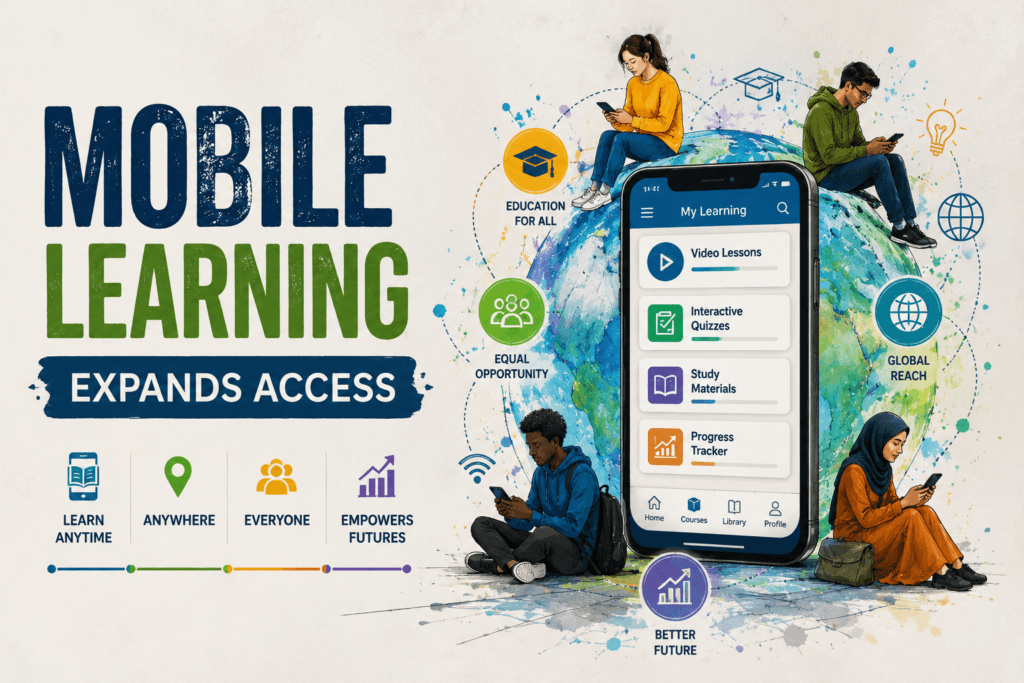
The smartphone has become the primary computing device for a significant portion of the global population, and instructional technology services that are designed with mobile access as a priority rather than an afterthought are better positioned to reach learners where they actually are. Mobile-optimized learning platforms, educational apps, and responsive content design collectively make it possible for learning to happen on a bus, during a lunch break, in a waiting room, or in any other moment of available time that a learner might have throughout the day.
Mobile learning is particularly significant for adult learners who are balancing education with employment and family responsibilities. When instructional technology services are genuinely mobile-friendly rather than merely technically accessible on a phone, they remove one of the most common practical barriers that prevent working adults from completing continuing education programs. The flexibility that mobile learning provides is not just a convenience feature. For many learners, it is the difference between being able to participate in education at all and being unable to fit it into the reality of their daily lives.
Support Services Complete Systems
No instructional technology service operates effectively without robust human and technical support infrastructure behind it. Help desks, training programs for educators, student orientation resources, technical troubleshooting systems, and instructional design consultation services are all components of a complete instructional technology support ecosystem. When these support services are strong, technology adoption rates increase, frustration decreases, and the investment in technology tools produces the returns it was intended to deliver.
Institutions that deploy instructional technology services without adequate support structures consistently see lower utilization rates, higher abandonment of new tools, and significant gaps between the intended and actual impact of their technology investments. The human element of instructional technology services is not secondary to the technology itself. It is what makes the technology work in practice rather than only in theory. Educators who feel supported in their use of new tools are far more likely to use those tools creatively and consistently, and that persistence is what ultimately translates technology investment into improved learning outcomes.
Conclusion
The five powerful categories of instructional technology services examined throughout this article represent only a portion of the full landscape of tools and systems available to educators and institutions today. Digital platforms, interactive engagement tools, video content, assessment technology, and accessibility services form a foundation upon which the broader ecosystem of instructional technology rests. Together, they address the most fundamental challenges of education: how to reach every learner, how to keep learners engaged, how to measure whether learning is actually happening, and how to continuously improve the quality of teaching and learning over time.
What makes instructional technology services genuinely powerful is not the sophistication of any individual tool but the coherence of the overall system in which those tools operate. A learning management system that nobody knows how to use is not an asset. An AI personalization platform deployed without adequate teacher training produces confusion rather than improvement. Interactive engagement tools used without pedagogical intentionality become distractions rather than learning accelerators. The technology itself is always only as effective as the human decisions that surround its implementation, which means that investing in instructional technology services must always include investing in the people who will use them.
The future of instructional technology services is one of continued expansion, deeper personalization, and greater integration across tools and platforms. Artificial intelligence will make personalization more precise. Virtual reality will make experiential learning more accessible. Data analytics will make early intervention more timely and effective. Accessibility technology will continue to widen the circle of who can participate meaningfully in formal education. And throughout all of these developments, the core purpose will remain the same: to help every learner access knowledge, develop skills, and reach their potential regardless of where they start, where they live, or what barriers they face. That purpose is worth every investment that instructional technology services require, and the evidence of their impact, when implemented thoughtfully, makes a compelling case for continuing to build, refine, and expand them at every level of education.