


The latest google business profile updates news — Q&A retirement, AI replies, freshness rules, and what local businesses need to actually do about it.
Why This News Matters
If you manage a local listing and haven’t checked in on google business profile updates news lately, you’re probably already behind. Google shipped three separate algorithm updates between February and April 2026 alone, and local search volatility hit its highest reading of the year in that window.
I’ve watched clients panic over ranking drops that had nothing to do with their SEO and everything to do with a platform change they hadn’t heard about. That’s the whole problem with this space — Google rarely announces things loudly, and by the time most business owners catch up, the ranking damage is already done.
So this isn’t a once-a-year refresh anymore. Staying on top of google business profile updates news has become closer to a monthly habit for anyone serious about local visibility, whether that’s a single storefront or a franchise managing fifty locations.
And it’s not just SEO agencies who need to care about this. Front-line staff answering the phone, the person posting to social media, whoever manages the listing on a Friday afternoon — all of them are affected when Google quietly changes what counts as an “active” profile.
What Changed In 2026
The short version: Google turned GBP into something closer to an AI-powered local marketing hub than a static listing. Q&A is gone. Reviews get emoji reactions now. Menus build themselves from a photo. And the ranking algorithm cares more about how people interact with your profile than how big your brand name is.
None of these changes happened all at once — they rolled out in waves through the spring, which is typical for how Google handles GBP updates. But taken together, they represent the biggest shift the platform has seen in years, and most of the google business profile updates news coverage this year has focused on exactly that pattern.
Some of these updates are helpful, honestly. They protect real businesses from fake listings and manipulated reviews, which has been a genuine problem for years. But they’ve also created a fair bit of confusion for honest owners just trying to keep their listing accurate without a marketing team behind them.
Google Retires The Q&A
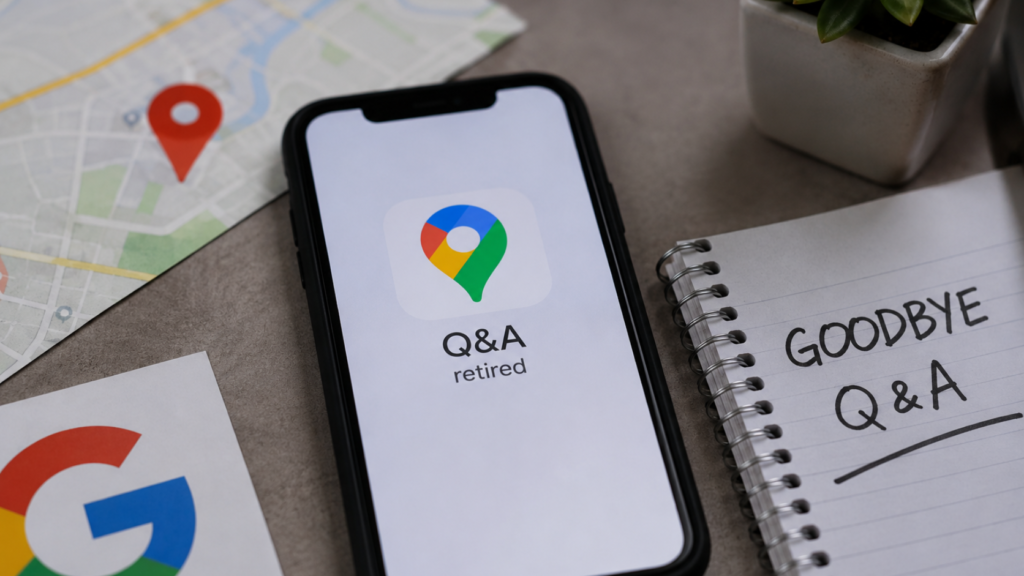
Google discontinued the My Business Q&A API on November 3, 2025, and by early 2026 the feature had started disappearing from listings entirely. New profiles created this year don’t get a Q&A section at all. Existing content may still show up in some places, but nobody can add fresh questions or answers anymore.
If you’d built a strategy around seeding your own Q&A with keyword-rich questions, that tactic is dead now. Worth mentioning here — this was one of the first real signals in the google business profile updates news cycle that Google was preparing to replace owner-controlled content with AI-generated answers instead.
For businesses that leaned on Q&A to pre-empt common customer questions — parking availability, whether they take walk-ins, that sort of thing — this content now needs to live somewhere else. Your business description, your services list, and your posts are the closest substitutes left.
AI Now Answers Customers
Q&A’s replacement is a Gemini-powered feature nicknamed “Ask Maps,” which generates answers to customer questions using your business information, your reviews, and data pulled from the wider web. You don’t write these answers yourself anymore — Google writes them for you based on what it already knows.
That’s a real shift in control. If your profile info is thin or outdated, Google will still answer questions about you. It’ll just do it without your input, pulling from whatever scraps of data it can find. Keeping your description, services, and attributes accurate isn’t optional busywork anymore — it’s the only lever you have left over what Ask Maps says about you.
This is also where review content starts pulling double duty. If a customer mentions in a review that you offer free parking or same-day service, that detail can end up feeding an AI-generated answer to a future customer’s question. Reviews aren’t just social proof anymore — they’re raw material for how Google represents your business.
WhatsApp Joins Contact Options
April 2026 brought a WhatsApp contact button to eligible profiles, replacing the deprecated Business Chat feature that Google quietly phased out. For businesses in markets where WhatsApp is the default messaging app, this closes a real gap that Business Chat never filled properly.
It’s not available everywhere yet, and Google hasn’t said much publicly about the rollout timeline for additional markets. But if you’re eligible and you turn it on, respond quickly — slow WhatsApp replies show the same way slow email replies do, and customers notice.
Google also expanded phone-based and text-based verification methods around the same time, moving away from relying solely on postcard mail. Together these changes point toward the same direction — faster, more direct contact channels replacing the slower, more formal ones GBP used to depend on.
Emoji Reactions Hit Reviews
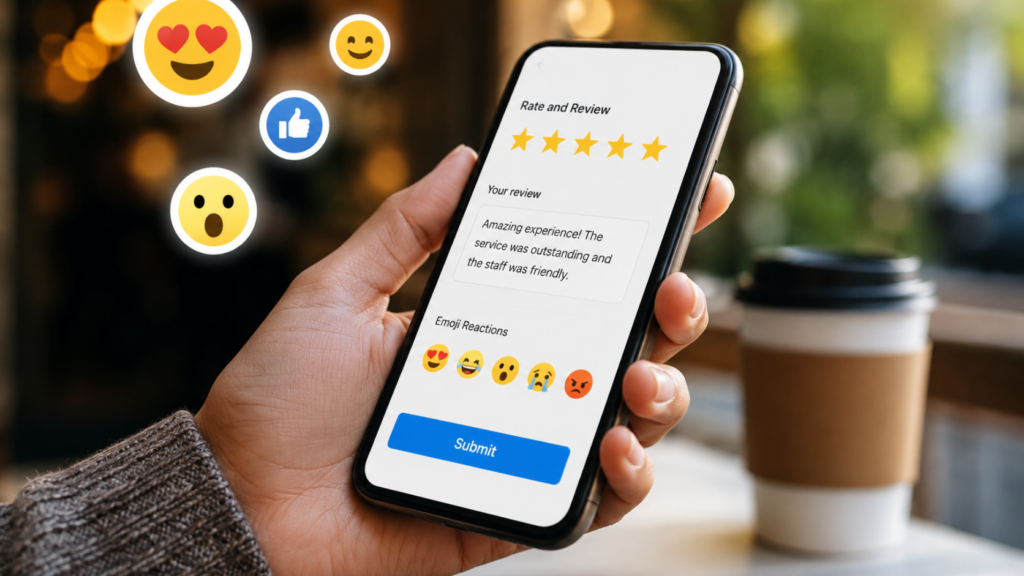
Also in April, Google added emoji reactions to Maps reviews — hearts, prayer hands, fire, that sort of thing. It’s a small feature on paper, but it changes how review engagement gets measured, since reactions now count as another interaction signal Google can track against your profile.
Reviews have always mattered for local ranking, and Google has been explicit that more reviews plus positive ratings can help visibility. But reaction counts feel like the next layer of that — engagement that isn’t a written review but still tells Google people are paying attention to what’s on your page.
Don’t chase reactions artificially, though. Asking customers to react to reviews the way you’d ask for a like on social media crosses into the same territory as review manipulation, and Google’s enforcement in that area has only gotten stricter this year.
AI Builds Your Menu
For restaurants especially, this is one of the more genuinely useful items in the recent google business profile updates news. Upload a photo or PDF of your menu, and Google’s AI extracts the text, structures it, and formats it into a clean, searchable layout on your profile automatically.
Manual menu entry used to be a real pain point — line by line, category by category, updated maybe twice a year if you were lucky. Now it’s mostly automated, which means there’s genuinely no excuse left for a stale or missing menu on a food business profile.
Double-check the extracted output before it goes live, though. AI menu extraction is good but not perfect, and I’ve seen prices misread or dish names garbled when the source photo had glare or awkward formatting. A five-minute review before publishing saves a customer-facing mistake later.
Freshness Window Shrinks Fast
Here’s the update that’s rattled the most business owners this year. Photos are now sorted by most recent upload, and the freshness window that determines how “active” your profile looks has tightened to roughly 30 days. Go past that without a new photo or post, and visibility can drop noticeably.
Google hasn’t published a clean, official “30-day rule” — it’s more of a pattern local SEO researchers have documented independently. But the direction is unmistakable. Reviews alone won’t carry a profile anymore. You need your own photos, updates and accurate info flowing in regularly, not just customer activity happening around you.
If you’re short on content ideas, keep it simple. A photo of finished work, a quick “here’s what we worked on this week” shot, even a picture of the team on a slow Tuesday — any of it counts more than nothing at all. Consistency matters more than production quality here.
Popularity Beats Old Prominence
Google adjusted its local ranking algorithm to weigh popularity more heavily than brand prominence. In practice, that means the number of interactions your profile gets — photo views, review reads, website clicks, direction requests — now plays a bigger role in who shows up in the local pack.
This is a genuinely bigger deal than it sounds. A smaller, less-known business with strong engagement can now outrank a bigger name coasting on reputation alone. You can read more about the mechanics of this shift directly through Google’s developer documentation, which tracks API-level changes as they roll out.
For smaller local businesses, this is actually good news. You don’t need decades of brand recognition to compete anymore — you need people actually clicking, calling, and engaging with your listing more than the business next door. That’s a far more level playing field than the old prominence-weighted system ever was.
Verification Gets Much Stricter
Video verification is now the default option for most new listings — storefronts, service-area businesses, and hybrid setups alike. Google wants a single continuous video showing signage, the interior or work vehicle, and some proof that the person filming actually manages the business. You can walk through the exact requirements on Google’s own verification guide, which covers what each business type needs to show.
It’s more friction than the old postcard system, no question. But it’s also made the platform genuinely harder to fake, which matters when you consider Google removed over 240 million policy-violating reviews in 2024 alone. Legitimate businesses benefit even when the process itself feels like more work than it used to.
If your profile gets suspended, don’t panic and don’t create a duplicate listing — that only deepens the problem. File for reinstatement through the official help form with dated photos of your signage and a document matching your listed address. Most legitimate suspensions get resolved within one to three weeks.
Posts Get Multi-Location Scheduling
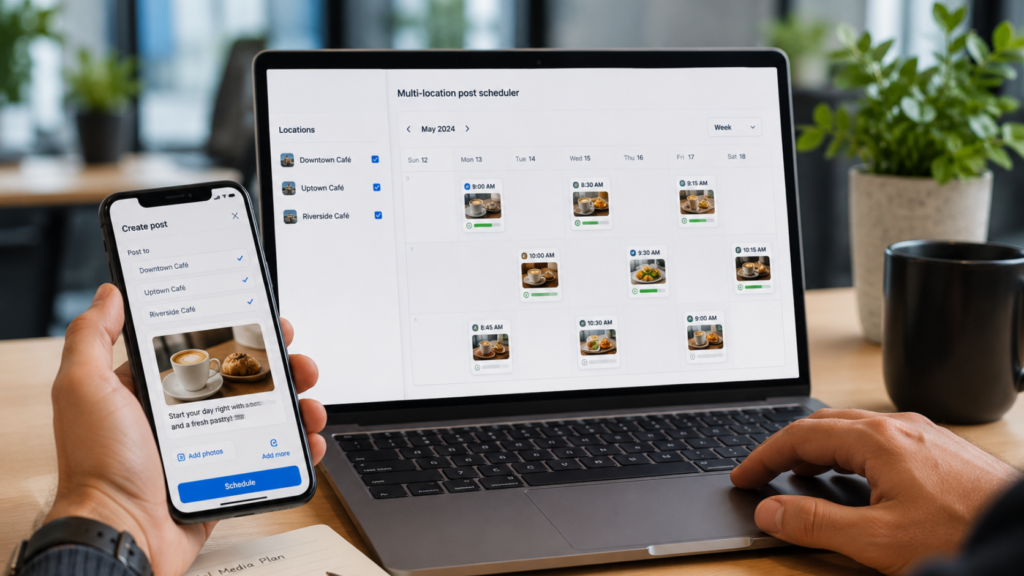
Google finally added post scheduling and multi-location publishing to GBP Posts this year, which sounds minor until you’ve actually managed fifty listings by hand. You can now draft content, set a date and time, and publish across every location in one click instead of logging into each profile separately.
For single-location owners this matters less, obviously. But if you’re running a franchise or managing multiple client profiles, this single change probably saves more hours per month than any other item on this list of google business profile updates news.
Posts themselves aren’t a direct ranking factor, worth being clear about that. They lift click-through and engagement within the local panel, which feeds back into that popularity signal mentioned earlier, but publishing a Post won’t single-handedly move you up the local pack on its own.
Review Replies Face Moderation
Since May 2026, review replies now pass through a moderation queue before they go live — Google calls it ReviewReplyState internally. Your reply doesn’t post instantly anymore; it sits briefly for review, and you can check its policy status through the Reviews API if you’re managing this programmatically.
Google is also testing AI-generated suggested replies you can review, edit, and submit yourself. That’s useful for volume, but a copy-paste AI response reads exactly like what it is. A short, specific reply that actually addresses what the customer said still builds far more trust than a generic one ever will.
Timing still matters here too. Aim to reply within 24 hours where you can, especially to negative reviews. Google’s AI increasingly summarises reviews for searchers, so addressing the specific complaint directly — long wait times, a billing mix-up, whatever it was — signals that you’re actively improving, not just posting a template apology.
A Real Business Example
A regional plumbing company I worked with had a solid 4.7-star average and a decent review count, but their profile had gone almost two months without a new photo. Their competitor down the road sat at 4.2 stars with outdated hours listed — objectively the weaker profile on paper.
And yet the competitor started outranking them in the local pack. Once the freshness window tightened, the plumbing company’s inactivity became the deciding factor, not the stars. They fixed it by posting twice a week — job photos, quick updates, the occasional customer shoutout — and regained their position within about six weeks.
That’s the clearest lesson in this year’s google business profile updates news: reviews earn trust, but activity earns visibility. You need both running at the same time, not one propping up the other. A five-star profile that’s gone quiet still loses to a four-star profile that’s obviously still working.
Common Mistakes Owners Make
The biggest one is treating GBP like a set-it-and-forget-it listing, updated once when the business opens and never touched again. That approach worked fine five years ago. It doesn’t anymore, not with a 30-day freshness window actively working against you.
A close second is relying on customer reviews to keep a profile looking active instead of posting owner content directly. Reviews help, genuinely, but they’re not a substitute for your own photos and updates — Google has been fairly explicit about that distinction lately.
Ignoring the primary category is another one people underestimate constantly. Switching a business from a broad category to a narrow, accurate one can shift Maps visibility more than almost any other single edit available on the entire profile.
And a smaller but common mistake — inconsistent business information across the web. Suite numbers formatted differently between your website and your listing, a phone number written two different ways, an old business name still floating around a directory somewhere. Each mismatch chips away slightly at how confident Google is that your listing is accurate.
Expert Tips To Stay Current

Bookmark a source that tracks google business profile updates news monthly rather than relying on word-of-mouth or a single blog post from last year. Google rolls out changes quietly and rarely all at once, so a static guide goes stale within a few months.
Post at least twice a week if you can manage it — new photo, quick text update, whatever’s genuinely happening at the business. And check your local businesses near you competitors’ profiles occasionally too, since watching what’s working for them locally often surfaces changes before any official announcement does.
Track your action rate, not just raw view counts. A profile with 500 views and 40 direction requests is performing better than one with 5,000 views and only 50 total actions. If you’re not already checking this in Insights, it’s worth five minutes a week.
One more thing worth mentioning — treat your website and your GBP as connected, not separate. Google increasingly uses your site to cross-check facts on your profile, the same way a good email deliverability news source tracks how platform trust signals shift over time across different channels. Consistency across both is what actually holds up under scrutiny.
Finally, don’t assume a perfect five-star rating is the goal. A flawless score with zero negative feedback is sometimes flagged as suspicious by Google’s own fraud filters. A strong 4.5-plus average with a healthy volume of recent, honest reviews reads as more trustworthy than a suspiciously spotless one.
Frequently Asked Questions
How often should I check google business profile updates news?
Monthly at minimum, since Google rolls out GBP changes gradually rather than all at once. A quarterly check risks missing a ranking-relevant update before it affects your visibility.
Is the Q&A feature completely gone now?
Functionally, yes. The API was discontinued in November 2025, no new content can be added, and new profiles are created without the feature at all.
Does posting frequency actually affect local ranking?
Posting itself is treated more as an engagement signal than a direct ranking factor, but the freshness window that determines “active” status does influence visibility noticeably.
Do I need video verification for an existing profile?
Not always immediately, but Google is expanding video verification as the default for new listings and increasingly for existing ones flagged during review, so expect the request eventually.
Can AI-generated review replies hurt my profile?
Not directly, but a generic AI reply that ignores the specific complaint can hurt customer trust, which indirectly affects engagement — the exact signal Google now weighs more heavily.
Conclusion
Keeping up with google business profile updates news isn’t optional anymore if local visibility matters to your business. The platform changed more this year than in the previous three combined, and most of it happened quietly enough that plenty of business owners still haven’t noticed.
Treat your profile like a living asset rather than a listing you set up once and left alone. Post regularly, verify properly, and check back on google business profile updates news often enough that the next algorithm shift doesn’t catch you off guard the way it caught that plumbing company.