
Tired of bad coffee at home? Your search for the best espresso machine ends here with 12 honest picks for every budget and taste.
If you’ve ever stood in a coffee aisle, stared at a wall of machines, and walked away more confused than before, you’re not alone. Finding the best espresso machine feels overwhelming — there are hundreds of options, wildly different price points, and everyone online seems to have a strong opinion. The good news is that you don’t need to spend weeks reading spec sheets. You just need honest, practical guidance from someone who’s actually paid attention to what matters in a home espresso setup.
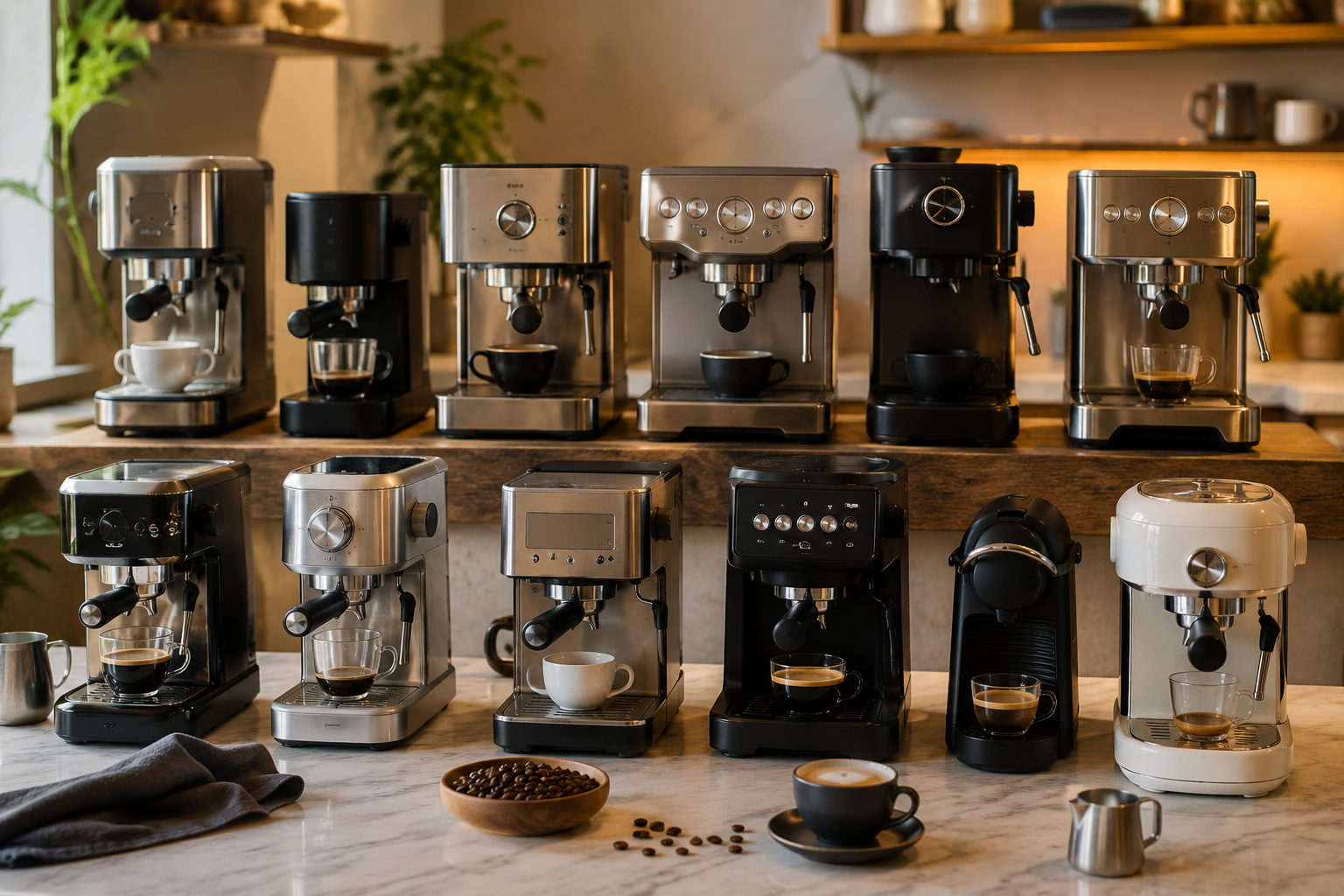
This article breaks down 12 of the best espresso machine picks for different needs, budgets, and skill levels. Whether you’re a beginner who wants something simple or a home barista chasing café-quality shots, there’s something here for you. Let’s get into it.
What Makes Espresso Machines Worth It
Not every coffee drinker needs a full espresso setup. But if you’re drinking two or more lattes, cappuccinos, or Americanos a day, the math changes quickly. A single café drink costs anywhere from $4 to $7. That adds up to over $1,400 a year just on your morning coffee habit. The best espresso machine pays for itself faster than most people expect.
Beyond the money angle, there’s the quality factor. Café espresso is inconsistent — it depends on the barista’s mood, the grind that day, and how busy the shop is. At home, once you dial in your machine, every shot is pulled exactly the way you like it. That kind of control is genuinely satisfying, and it’s one reason so many people make the switch.
Beginner-Friendly Picks Under $300
Starting your espresso journey doesn’t require a massive investment. The best espresso machine for beginners is one that simplifies the process without cutting corners on flavor. The De’Longhi EC155 is a classic entry point — it uses a 15-bar pump, heats up in under a minute, and handles both ground coffee and pods. It’s not perfect, but it’s a reliable teacher.
The Nespresso Essenza Mini is another solid pick at this level, especially if you want espresso without the fuss. It uses capsules, so there’s no grinding or tamping involved. The shots are consistently good, the machine is tiny, and cleanup takes about 30 seconds. For someone who just wants a fast, decent espresso in the morning, it checks every box.
Mid-Range Machines Between $300 and $700
This is where things get genuinely interesting. The best espresso machine options in the $300–$700 range offer real pressure control, better steam wands, and more durable build quality. The Breville Bambino Plus sits right at the top of this tier. It preheats in 3 seconds, has automatic milk texturing, and pulls shots that rival machines costing twice as much.
The Gaggia Classic Pro is another mid-range legend. It has a commercial-style portafilter, a group head that keeps temperature stable, and a steam wand that lets you actually practice latte art. It does have a learning curve, but that’s part of what makes it fun. If you’re someone who enjoys the process of pulling a good shot, the Gaggia will reward your patience every time.
High-End Espresso Machines Above $700
Once you cross the $700 mark, you’re entering prosumer territory. The best espresso machine at this level starts behaving like something you’d find behind a café counter. The Breville Barista Express combines a built-in burr grinder with precise pressure control — it’s an all-in-one system that removes a major variable from the equation.
The De’Longhi La Specialista Arte is another strong contender. It has sensor grinding technology, dual heating systems for espresso and steam, and a knob-based interface that feels genuinely satisfying to use. For around $800, you get a machine that handles the technical side so you can focus entirely on the coffee. These machines aren’t cheap, but they’re built to last a decade with proper care.
Super-Automatic Options for Convenience
Super-automatic machines do everything — grind, tamp, brew, and even froth — with one button press. The best espresso machine in this category is the Jura E8, which consistently earns top marks for shot quality, build reliability, and ease of use. It uses a pulse extraction process that Jura developed specifically to optimize flavor extraction.
The Philips 3200 LatteGo is a more affordable super-automatic that still delivers impressive results. Its milk system uses a carafe rather than a traditional wand, which means there’s almost nothing to clean. For busy households where multiple people want different drinks, a super-automatic removes the friction completely. Push a button, get your drink, move on with your day.
Manual Espresso Machines for Purists
Some people want full control over every variable, and that’s a completely valid approach. The best espresso machine for purists is a manual lever machine, where you control the pressure profile entirely by hand. The Flair 58 is the gold standard here. It uses a 58mm portafilter, has no electronics whatsoever, and produces shots with a clarity and texture that many electric machines can’t match.
According to the Specialty Coffee Association, pressure profiling — the ability to vary pressure during extraction — is one of the most significant factors in espresso quality. Manual machines give you that capability in the most direct way possible. The trade-off is time and skill. You need to practice, pay attention, and develop a feel for the process. But when you pull a perfect shot manually, it genuinely feels like an accomplishment.
Best Machines for Small Kitchens
Counter space is real estate, and not everyone has room for a bulky machine. The best espresso machine for small kitchens needs to be compact without feeling cheap. The Nespresso Vertuo Pop is tiny — it takes up less space than a kettle — and brews five different cup sizes using centrifugation technology that spins the capsule to extract flavor evenly.
The De’Longhi Dedica Arte is another slim option worth considering. Its width is just 6 inches, which means it fits into tight spots that other machines simply can’t. Despite its small footprint, it has a proper steam wand and a 15-bar pump. For apartment dwellers or anyone with a cramped kitchen, these compact picks prove that size doesn’t have to mean sacrifice.
Pod vs Ground Coffee Machines
This is one of the most common debates when choosing the best espresso machine, and the honest answer is that it depends on your priorities. Pod machines are faster, cleaner, and more consistent. Ground coffee machines give you more control, better flavor potential, and significantly lower ongoing costs. A bag of quality espresso beans costs about $15–$20 and makes around 30 shots, compared to $1–$1.50 per pod.
If sustainability matters to you, that’s another factor. Most coffee pods create plastic or aluminum waste, though some brands like Nespresso have recycling programs. Ground coffee produces just a puck of spent grounds that goes straight into the compost. Neither choice is wrong, but understanding the trade-offs helps you pick the option that fits your lifestyle rather than someone else’s.
Milk Frothing and Steam Wand Quality
If you drink milk-based espresso drinks — lattes, flat whites, cappuccinos — the steam wand is just as important as the brew head. The best espresso machine for milk drinks needs a wand that produces fine, velvety microfoam rather than big frothy bubbles. Machines with single-hole steam tips are harder to use but give you more control once you learn the technique.
Machines with Pannarello wands (the ones with an outer sleeve) automatically aerate the milk, which is easier for beginners but produces a coarser foam. If latte art is your goal, remove the sleeve and learn to use the bare tip. It takes a few weeks of practice, but the results are dramatically better. Milk quality matters too — whole milk steams the best due to its fat and protein content.
Grinder Pairing Recommendations
The best espresso machine in the world will still pull a bad shot if the grind is wrong. Espresso requires a fine, consistent grind, and most blade grinders simply can’t deliver that. A burr grinder — either conical or flat — is essential if you want repeatable results. The Baratza Encore ESP is specifically designed for espresso and costs around $200.
For those on a tighter budget, the Timemore C3 hand grinder is a surprisingly capable option. It uses stainless steel burrs, produces a consistent grind, and costs under $100. Hand grinding takes about 2–3 minutes per dose, which some people find meditative and others find annoying. Either way, upgrading your grinder often makes a bigger difference to shot quality than upgrading the machine itself.
Maintenance and Cleaning Tips
Every best espresso machine recommendation should come with a cleaning reality check. Espresso machines require regular maintenance to keep performing well. Backflushing with a blind filter removes oils from the group head — this should be done weekly for home machines. The portafilter, basket, and drip tray need daily rinses. Descaling should happen every 2–3 months depending on your water hardness.
Machines with removable brew groups (like most super-automatics) are the easiest to clean — you just pop it out and rinse under the tap. Traditional machines take more effort but aren’t difficult once you build the habit. Ignoring maintenance is the fastest way to ruin an expensive machine, so factor cleaning time into your buying decision. A machine you’ll actually maintain is better than one you’ll neglect.
Water Quality and Espresso Taste
This is one of the most overlooked factors in home espresso. The best espresso machine can’t compensate for bad water. Hard water loaded with minerals causes scale buildup and dulls flavor. Overly soft water, on the other hand, produces flat-tasting espresso with no brightness. The ideal water for espresso sits somewhere in the middle — around 75–150 mg/L of total dissolved solids.
Many espresso enthusiasts use filtered water or Third Wave Water mineral packets, which let you start with distilled water and add back only the minerals that help extraction. It sounds nerdy, but a side-by-side comparison is genuinely eye-opening. The same beans, the same machine, the same grind — and the espresso tastes noticeably better with properly balanced water. It’s a small change with a surprisingly big impact.
Budget Planning Before You Buy
Before you commit to any best espresso machine purchase, it’s worth mapping out the full cost. The machine itself is just the starting point. Factor in a quality burr grinder ($100–$250), fresh specialty beans ($15–$25/bag), and accessories like a tamper, milk pitcher, and knock box ($50–$100 total). Your “under $400 machine” might actually be a $600 setup by the time it’s properly equipped.
That said, none of these extras need to be bought all at once. Many people start with a basic setup and upgrade components over time. The grinder usually comes first because it has the biggest impact on shot quality. The tamper and pitcher come next. By the time you’ve been pulling shots for six months, you’ll have a much clearer sense of where to invest next. Don’t let the full cost discourage you from starting.
Espresso Machine Brand Reliability
Brand reputation matters when you’re spending several hundred dollars on a machine. The best espresso machine brands consistently mentioned for reliability are Breville, De’Longhi, Gaggia, Rancilio, and Jura. These companies have been building espresso equipment for decades and have strong spare parts availability. Finding a replacement group head gasket or shower screen for a Breville Barista Express is easy. Finding the same for an off-brand machine can be a nightmare.
Warranty coverage is another factor. Most reputable brands offer a 1–2 year warranty, and some extend that to 3 years for registered products. Read the fine print on what’s covered — heating elements, pumps, and electronics are the components most likely to need attention. User communities on Reddit (r/espresso has over 400,000 members) are also invaluable for troubleshooting and buying advice.
Where to Buy and Save Money
Timing your best espresso machine purchase can save you a significant amount. Black Friday and Amazon Prime Day consistently offer 20–40% discounts on popular models. Major retailers like Williams Sonoma and Sur La Table occasionally offer bundle deals that include accessories. Refurbished machines from brands like Nespresso and De’Longhi often come with full warranties at 30–40% off the original price.
Buying through authorized dealers matters too. Grey market machines (imported from other regions) may not be covered by local warranties and might have different voltage specs. Stick to authorized retailers or buy directly from the brand’s website. If you’re buying secondhand, stick to machines with straightforward maintenance histories and avoid anything where the previous owner “fixed it themselves.”
FAQ
Q: What is the best espresso machine for home use in 2025?
The best espresso machine for home use depends on your budget and how much effort you want to put in. For beginners, the Breville Bambino Plus is a strong choice. For those wanting full control, the Gaggia Classic Pro is hard to beat. Super-automatic buyers should look at the Jura E8.
Q: How many bars of pressure does a good espresso machine need?
Most home espresso machines advertise 15 bars, but the actual extraction pressure for espresso is around 9 bars. A pump rated at 15 bars just means it has enough headroom to maintain 9 bars consistently during extraction. Don’t judge a machine solely by its bar rating — it’s marketing more than it is a direct quality indicator.
Q: Is buying an expensive espresso machine actually worth it?
For daily coffee drinkers, yes. If you’re spending $5 per day at a café, that’s $1,825 per year. A $700 machine with a $200 grinder pays for itself in under a year and continues saving you money indefinitely. The quality you get at home, once you’ve practiced, often surpasses what most cafés produce.
Q: How often should I clean my espresso machine?
Daily rinsing of the portafilter and basket is a must. Weekly backflushing keeps the group head clean. Descaling every 2–3 months prevents scale buildup that damages internal components. Following a consistent cleaning routine extends machine life significantly and keeps every shot tasting the way it should.
Conclusion
Finding the best espresso machine for your kitchen doesn’t have to be a stressful, months-long process. Once you know your budget, your tolerance for manual effort, and whether you prefer convenience or control, the right pick becomes much clearer. The 12 options covered here represent genuinely different approaches to home espresso — from pod machines that remove all friction to manual lever setups that put everything in your hands.
The best espresso machine isn’t necessarily the most expensive one or the one with the most features. It’s the one you’ll actually use every day. A $250 machine that you dial in perfectly and maintain well will consistently outperform a $1,000 machine that collects dust because it feels too complicated. Start where you’re comfortable, learn the basics, and upgrade when you feel ready. Good espresso is closer than you think, and the best espresso machine for you is waiting — you just needed to know where to look.