

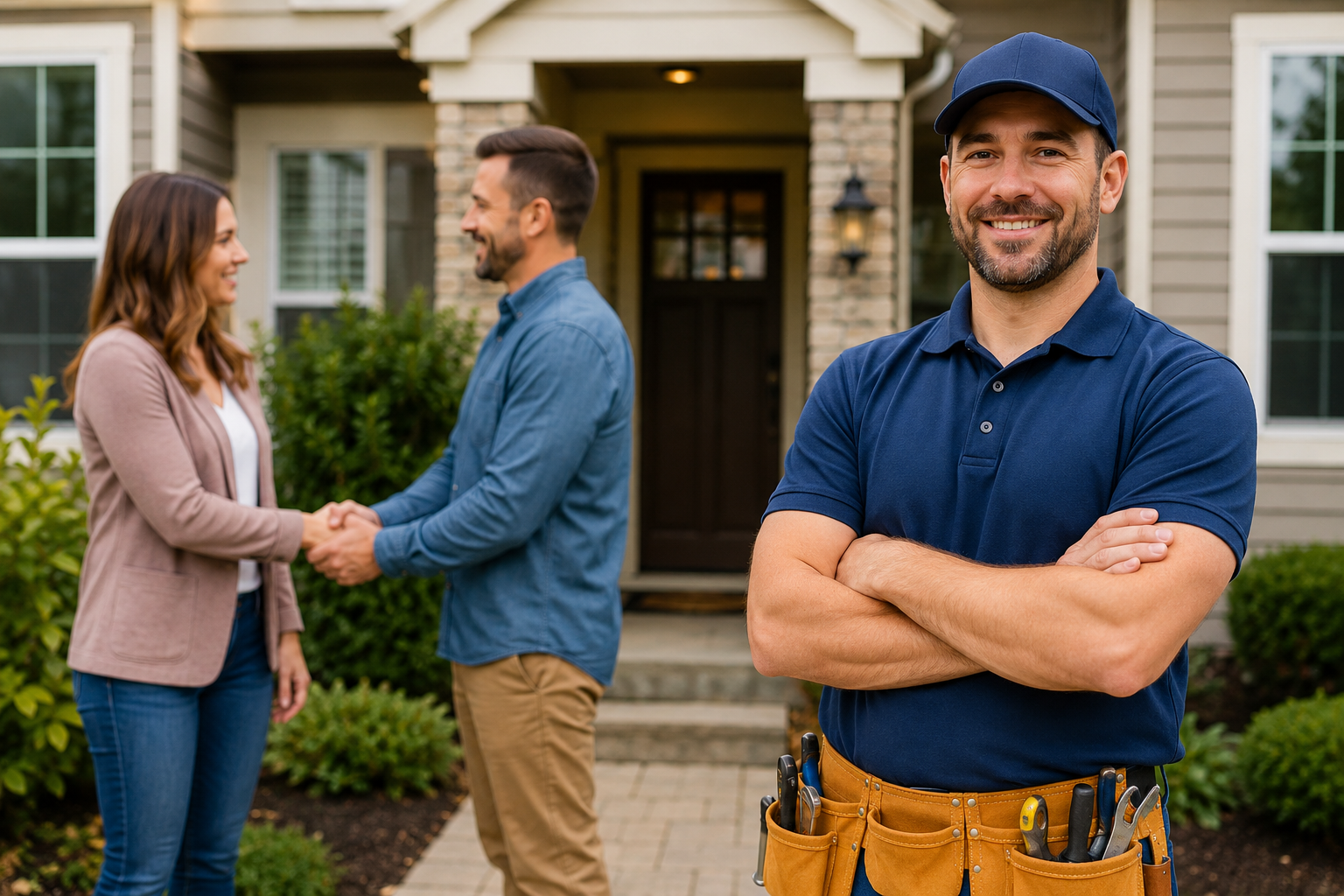
A handyman franchise might be the most overlooked service business of 2025 — here is what real owners say after their first year of running one.
What Handyman Franchise Means
A handyman franchise is a business model where you pay an established brand for the rights to operate a home repair and maintenance service under their name, systems, and support structure. You are not inventing anything from scratch. The playbook already exists — trained technicians, branded vehicles, marketing templates, pricing guides, and customer service protocols are all handed to you as part of the agreement. What you bring is the drive to execute it consistently in your local market every single day.
The home services industry in the United States generates over $600 billion annually, and the handyman segment sits right at the core of that demand. Homeowners constantly need minor repairs, installations, and maintenance tasks that fall below the threshold of a licensed contractor but above what they want to handle themselves. A handyman franchise fills that gap in a way that feels professional, reliable, and trustworthy — three things that independent local handymen often struggle to project consistently to new customers.
Handyman Franchise Market Demand
Demand for home repair services has not slowed down and there is no credible reason to expect it will anytime soon. The average age of homes in the United States is now over 40 years, which means a growing share of the housing stock needs regular attention. Roof seals, door frames, bathroom fixtures, deck boards, drywall patches — the list of things that wear out in an aging home is long and a handyman franchise is positioned directly in front of that demand every single week.
If you have been looking at unique business ideas in the service sector, the handyman franchise category consistently ranks among the faster-growing segments available to first-time investors. The reason is straightforward — homeowners are busy, rates for independent handymen are unpredictable, and people increasingly prefer booking from branded companies they can review online, hold accountable, and return to without restarting the search process every time something new needs fixing around the house.
The pandemic years also shifted homeowner behavior in a lasting way. More people working from home means more people noticing what needs fixing, more time spent inside the house, and more emotional investment in the condition of the living space. That behavioral shift has translated into sustained demand for handyman franchise services that shows no sign of reversing even as work patterns continue evolving across different markets.
Why Investors Choose Handyman
Investors choose a handyman franchise for reasons that go beyond simple revenue potential. The first is low barrier to entry compared to most franchise categories. You do not need a commercial kitchen, a medical license, a fleet of heavy vehicles, or specialized real estate to get started. A branded service van, a trained technician team, and the right scheduling software are often enough to begin generating revenue within the first few weeks of opening your territory.
The second reason is margin structure. Home service businesses in the handyman franchise space typically operate with gross margins between 40 and 60 percent depending on labor efficiency and job mix. Unlike a food or retail franchise where product costs and spoilage eat into margins constantly, a handyman operation’s primary cost is labor — and labor is something you can schedule, optimize, and scale with relative precision once you understand your local market volume and seasonal patterns well.
The third reason is repeat business. A customer who uses your handyman franchise for a bathroom fixture repair in spring is the same person who calls about a fence post in summer, a door seal in autumn, and a ceiling fan installation before the holidays. That natural repeat cycle combined with neighbor referrals creates a customer base that compounds in value without requiring constant expensive advertising to maintain.
Handyman Franchise Startup Costs
Startup costs for a handyman franchise vary depending on the brand, territory size, and whether you are buying a new territory or an existing operation. Entry-level concepts can be launched for as little as $60,000 to $100,000 in total initial investment. Mid-tier brands with stronger national recognition typically require $100,000 to $200,000. Premium multi-territory operations can push into the $300,000 range when you factor in vehicles, equipment, insurance deposits, and working capital reserves for the first several months.
The franchise fee itself is usually between $15,000 and $50,000 depending on the brand and territory size. That fee covers your right to use the name, access the training program, receive the operational systems, and get launch support from the corporate team. It is a one-time cost that unlocks everything the franchisor has built over years of refining the model — which is ultimately what you are paying for when you invest in a handyman franchise rather than starting independently from scratch.
Working capital is the piece most first-time franchise buyers underestimate significantly. Even a well-run handyman franchise takes time to build its customer base to full capacity. Budget for at least four to six months of operating expenses beyond your opening costs. Owners who run out of runway before reaching sustainable revenue are not necessarily doing anything wrong operationally — they simply did not plan their cash reserves with enough buffer to survive the early growth phase comfortably.
Choosing the Right Brand
Selecting the right handyman franchise brand is one of the most consequential decisions in the entire process and it deserves more time than most buyers give it. There are several options in the home services space — Mr. Handyman, Ace Handyman Services, HouseMaster, and newer entrants — and they are not equal in terms of support quality, territory protection, royalty structure, or growth trajectory across different regional markets.
Start with the Franchise Disclosure Document that every franchisor is legally required to provide at least 14 days before you sign anything. Item 19 covers financial performance representations — not all brands include this data but those who do give you a clearer picture of what operators in their network actually earn after fees and expenses. Item 20 shows franchisee turnover rates which is one of the most honest signals of how satisfied existing owners actually are with the brand and its support systems.
Talk to at least ten current franchisees independently — not just the references the franchisor hands you. Find operators in different markets and ask them directly whether they would make the same investment again, how responsive corporate support is when problems arise, and what they wish they had known before signing. Those conversations will tell you more about the daily reality of operating a handyman franchise with that specific brand than any sales presentation ever will.
Territory Rights Explained
Territory rights in a handyman franchise agreement define the geographic area within which the franchisor agrees not to open a competing location of the same brand. The strength of that protection varies enormously between brands and between individual agreements, and understanding exactly what you are getting is not optional before committing any capital to the investment at all.
Some handyman franchise brands offer genuine geographic exclusivity within a defined zip code cluster or radius. Others offer only a right of first refusal on adjacent territories, which is meaningfully weaker and can leave you exposed if the brand expands aggressively into your surrounding area. Read the territory section of your franchise agreement word by word and have a franchise attorney explain any language that feels ambiguous before you proceed.
Think beyond today when evaluating territory size. A territory that feels adequate in a stable suburb might feel cramped in three years if new housing developments bring in thousands of additional households. Ask the franchisor for population and household data within your proposed territory and model what customer penetration at different rates would look like for your revenue projections. A handyman franchise lives or dies in large part on the quality and size of the territory it operates within.
Training and Support Quality
According to the International Franchise Association, franchisee satisfaction with ongoing support is one of the strongest predictors of long-term business success across all franchise categories. In the handyman franchise space this is especially true because the technical and operational complexity of running multiple service crews across a territory requires more than a one-time orientation and a binder of printed materials to get right.
Most established handyman franchise brands offer initial training programs of two to four weeks covering technical service standards, customer communication protocols, scheduling systems, job pricing methodology, and local marketing basics. The best programs combine classroom instruction at a corporate training facility with hands-on field experience before you ever open your territory to paying customers. That combination reduces early mistakes significantly compared to operators who learn entirely on the job.
Post-opening support is where the real differences between handyman franchise brands become visible. Weekly check-in calls, dedicated business coaches, regional field visits, online training libraries, and annual franchisee conferences all contribute to an operator’s ability to solve problems quickly and keep growing past the initial learning curve. Ask every franchisor you evaluate exactly what their post-opening support calendar looks like for the first 90 days and the first full year of operation.
Handyman Franchise Staffing Challenges
Staffing is the most consistent operational challenge across the handyman franchise industry and experienced owners will tell you this without hesitation. Finding skilled, reliable technicians who represent your brand professionally in customers’ homes is genuinely difficult in most markets. The shortage of trade labor across the United States has made competition for qualified handymen intense between franchise operations, independent contractors, and residential construction companies all hiring from the same limited pool.
The handyman franchise brands that handle staffing best tend to invest in technician development rather than only recruiting already-experienced candidates. They hire people with mechanical aptitude and positive attitudes, then train them through structured certification programs that build competence systematically over time. That approach costs more upfront in training hours but produces technicians who are loyal to the brand and consistent in their quality because they were developed internally.
Retention matters as much as recruitment in this industry. Technicians who feel valued, fairly compensated, and supported in their professional growth stay longer and perform better than those who feel like interchangeable labor units. Bonus structures tied to customer satisfaction scores, clear advancement pathways from technician to lead to supervisor, and regular recognition for quality work all contribute to the kind of team stability that a handyman franchise needs to grow its reputation in a local market.
Marketing Your Local Territory
Most handyman franchise agreements include access to a national or regional marketing fund that produces branded content, digital advertising materials, and promotional campaigns that build brand awareness at scale. That national presence helps — customers who have seen your brand on television or online are more likely to trust and book your local operation than one they have never heard of. But local marketing is your direct responsibility and it is where individual franchise performance diverges most significantly.
Google Business Profile is the single most important free marketing tool for any handyman franchise operator. Keeping your profile current with accurate service categories, updated hours, fresh job photos, and a steady stream of five-star customer reviews directly determines how often your business appears when local homeowners search for repair help. A handyman franchise with 200 Google reviews and a 4.8 rating will consistently outrank competitors with a fraction of that social proof regardless of budget differences.
Door hangers in neighborhoods where you have recently completed jobs, partnerships with local real estate agents who need pre-listing repairs done quickly, and seasonal promotions timed around common home maintenance needs are all local marketing moves that experienced handyman franchise operators use to build dense customer clusters in specific neighborhoods. That geographic density reduces drive time between jobs and increases the number of billable hours your technicians complete each day.
Handyman Franchise Profit Margins
Profit margins in the handyman franchise industry vary by brand, market, and how efficiently each location manages its labor and scheduling. Well-run operations typically generate net profit margins of 15 to 25 percent after royalties, marketing fund contributions, labor costs, vehicle expenses, insurance, and administrative overhead. That margin range is competitive with most service franchise categories and significantly better than most food or retail franchise concepts of comparable investment size.
Average ticket values in the handyman franchise space range from $200 to $600 per job depending on the complexity and duration of the work. Operations that focus on multi-hour jobs and recurring maintenance agreements tend to generate higher revenue per technician per day than those chasing high volumes of small quick tasks. Finding the right job mix for your local market is something that takes several months of operational data to optimize properly.
Royalty fees typically range from 5 to 7 percent of gross revenue in the handyman franchise category. Combined with a marketing fund contribution of 1 to 2 percent, you are generally sending 6 to 9 percent of every dollar earned back to the franchisor before paying any other operating expense. Modeling this accurately in your financial projections before you sign anything is essential — not because the fees are unreasonable but because ignoring them in your projections will make your first year feel significantly less profitable than you expected.
Handyman Franchise vs Going Independent
The debate between buying a handyman franchise and starting an independent home repair business comes up constantly among aspiring service entrepreneurs. Both paths can work. But they do not work equally well for every person in every market at every stage of their experience with running a business and managing a team of tradespeople.
An independent handyman business gives you complete control — your brand name, your pricing, your supplier relationships, your service menu, and every operational decision are entirely yours to make. There are no royalties, no marketing fund contributions, and no approval processes when you want to change something. The tradeoff is starting with zero brand recognition in a market full of options and having to build every customer relationship, every process, and every marketing channel entirely from scratch with no blueprint to follow.
A handyman franchise flips that equation meaningfully. You pay ongoing fees in exchange for a proven system, a recognized brand, trained technicians faster, marketing support, and an established customer trust signal that independent operators spend years building. For most people entering home services without prior business ownership experience, the franchise model reduces early failure risk substantially and typically produces profitable operations faster than independent startups in the same markets.
Handyman Franchise for Veterans
Many handyman franchise brands actively recruit military veterans and offer meaningful incentives for them to invest. Veterans often make exceptional franchise operators because the discipline, systems thinking, team leadership, and operational consistency developed through military service translate directly into running a service business with multiple moving parts and a team of field technicians to manage daily.
The VetFran program, operated through the International Franchise Association, connects veterans with franchise brands that offer discounted franchise fees — sometimes as much as 20 to 30 percent off the standard investment — as a direct benefit for military service. Several handyman franchise brands participate in this program and actively prioritize veteran applicants during their franchisee selection process because of the track record veterans have shown as operators across the home services sector.
Beyond the financial incentive, many veterans report that the structured nature of a handyman franchise system feels familiar and comfortable compared to the ambiguity of building a business independently. Having clear standard operating procedures, defined performance metrics, and a chain of support to escalate problems through mirrors the organizational structures that veterans already know how to operate within effectively and confidently.
Scaling to Multiple Units
Many handyman franchise investors start with a single territory and expand to two or three once they have the first location running smoothly and profitably. Multi-unit ownership is actively encouraged by most major handyman franchise brands because experienced operators who already know the system are lower-risk expansion partners than brand new investors learning everything for the first time with a second territory.
The economics of multi-unit handyman franchise ownership improve meaningfully at scale. Shared management infrastructure across territories, consolidated marketing spend, volume discounts on vehicles and equipment, and the ability to move technicians between territories during peak demand periods all contribute to better margins at the portfolio level than any single territory can achieve on its own.
The transition from single-unit to multi-unit operator is where many franchise owners hit their first serious challenge. Running one handyman franchise well requires a specific operational skill set. Running three requires building managers who can operate territories independently while you focus on strategic oversight rather than daily job scheduling. Make sure your first territory runs at consistent profitability for at least 12 months before committing capital to a second one.
Common Mistakes New Owners Make
New handyman franchise owners make a predictable set of mistakes that experienced operators have already worked through. Knowing them in advance does not guarantee you will avoid them entirely but it shortens the learning curve and reduces the financial cost of figuring things out the hard way in your first year of operation.
The first mistake is underinvesting in recruitment before opening. Many new owners focus entirely on marketing and customer acquisition without ensuring they have enough trained technicians to fulfill the jobs that marketing generates. A handyman franchise that books more work than it can deliver damages its reputation in the local market faster than slow growth would have.
The second mistake is pricing too low to win early customers. Discounting heavily in the first months feels like a smart way to build volume but it attracts price-sensitive customers who rarely become loyal long-term clients and it trains your market to expect rates that your cost structure cannot support sustainably. Price at your standard rate from day one and invest that margin in quality work and strong customer follow-up instead.
Handyman Franchise Exit Strategy
One of the most underappreciated aspects of investing in a handyman franchise is the built-in exit strategy the brand provides when you eventually decide to sell. A documented, well-run franchise location with clean financials, strong customer retention, and positive reviews is a far more attractive acquisition target than an independent home repair business of comparable revenue with no brand affiliation and no documented systems.
Handyman franchise resales typically command valuation multiples of 2 to 3.5 times seller’s discretionary earnings depending on the brand strength, territory quality, lease or vehicle terms, and recent revenue trends. A location generating $120,000 in annual net income could realistically sell for $240,000 to $420,000 in the current market for established home service franchise resales.
Plan your exit from the beginning even if you intend to own the business for a decade. Keep clean financial records from your first month of operation. Maintain your vehicles and equipment to brand standard. Stay current on all franchisor requirements and never let your performance metrics drift. These habits make your handyman franchise dramatically easier to sell at a strong valuation when the time eventually comes to move on to something new.
Frequently Asked Questions
What is a handyman franchise and how does it differ from hiring a handyman?
A handyman franchise is a branded, systemized business that employs multiple technicians and operates under a recognized national or regional brand name. Hiring an independent handyman means working with an individual operator with no brand backing, no standardized pricing, and no corporate support structure behind the service. The franchise model typically offers more consistency, accountability, and recourse if something goes wrong.
How much does it cost to buy a handyman franchise in 2025?
Total initial investment ranges from $60,000 for entry-level concepts to $300,000 or more for established multi-territory brands. The franchise fee component is usually $15,000 to $50,000. The remainder covers vehicles, equipment, insurance, initial marketing, and working capital to sustain operations during the customer acquisition phase before revenue reaches full capacity.
Is a handyman franchise profitable for first-time business owners?
Yes, when the right brand is selected and the owner commits to both the operational systems and the local marketing effort. Most handyman franchise operators reach break-even within 12 to 24 months and generate consistent net income after that point. The franchise model reduces early failure risk significantly compared to starting an independent home repair business without prior experience in the trade or in business ownership.
What should I ask before signing a handyman franchise agreement?
Ask about territory size and exclusivity protections, royalty and marketing fund fee percentages, what post-opening support looks like for the first 90 days and beyond, franchisee turnover rates from Item 20 of the FDD, and whether Item 19 includes actual financial performance data from existing operators. Always have a franchise attorney review the full agreement before signing anything.
Conclusion
A handyman franchise is one of those business investments that rewards people who do their homework before committing and their best work after opening. The demand is real, the margins are solid, and the repeat customer dynamic creates a business that gets more valuable with every satisfied homeowner who saves your number in their phone. None of that happens automatically — but the franchise system gives you a significantly better starting position than most alternatives at a comparable investment level.
The handyman franchise operators who build genuinely profitable businesses share a few consistent traits. They choose their brand carefully based on FDD data and honest conversations with existing owners. They hire and retain good technicians by treating them as the core asset of the operation. They invest in local marketing consistently rather than waiting for national brand awareness to do all the work. And they manage their financials with enough discipline to weather the early months before customer volume reaches its full potential.
If a handyman franchise is something you are seriously evaluating, start by requesting FDDs from three to five brands in your target market. Compare their support structures, fee models, and territory terms side by side. Talk to owners independently. Model your numbers conservatively. And go in with enough working capital to give the business the runway it needs to show you what it can actually do.