
Dinner suit vs business suit confuses most men, but the difference matters more than you think for any formal event.
Most guys think a suit is a suit, until they show up to a black tie wedding wearing their work blazer and realize everyone else looks like they stepped out of a movie. That’s the dinner suit vs business suit confusion in a nutshell, and honestly, it trips up more people than you’d expect. The two garments look similar from across a room, but the details separate them in ways that actually matter once you know what to look for.
I learned this the hard way at a friend’s engagement party years ago. I wore my regular navy office suit, thinking it would pass for formal enough. It didn’t. Understanding the dinner suit vs business suit divide isn’t just fashion snobbery, it’s about reading the room correctly and not standing out for the wrong reasons.
What Defines A Dinner Suit
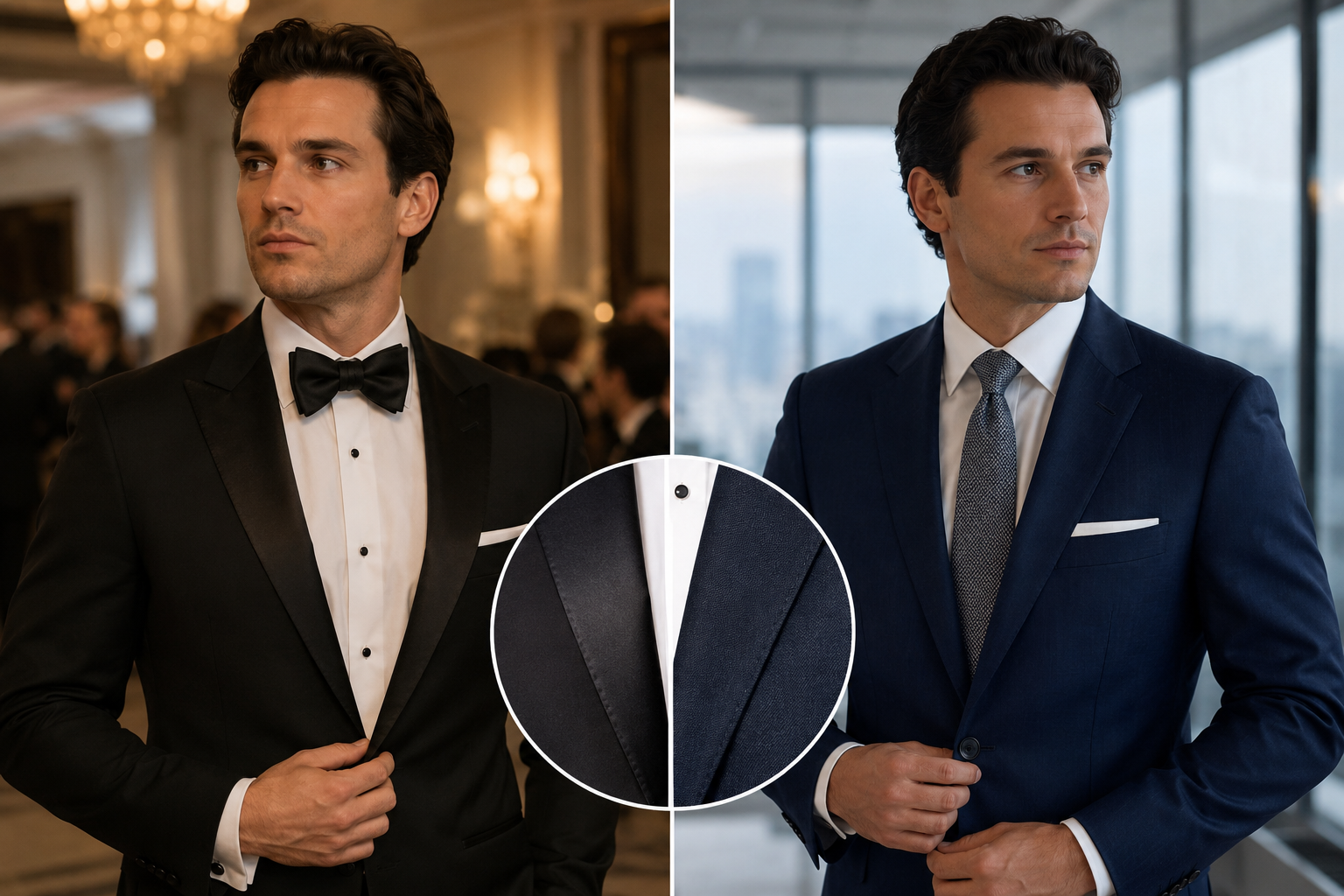
A dinner suit, often called a tuxedo in American English, is built specifically for evening formal occasions. It typically comes in black or midnight blue, paired with satin or grosgrain lapels that catch the light differently than regular wool. This shine factor is actually the easiest visual cue when comparing dinner suit vs business suit options side by side.
The trousers usually have a satin stripe running down the outer seam, and the jacket often features a single button closure rather than the two or three buttons common on everyday suits. Shirts worn underneath typically have a pleated or marcella front, paired with a bow tie instead of a standard necktie.
There’s also a certain rigidity to dinner suit etiquette that business suits simply don’t carry. You don’t really improvise with a dinner suit the way you might with office wear. The whole point is uniformity and tradition, which is part of why the dinner suit vs business suit comparison feels so stark once you dig into the details.
What Defines A Business Suit
Business suits, on the other hand, are built for versatility and daily wear. They come in countless colors, fabrics, and patterns, from charcoal grey to subtle pinstripes, and they’re designed to handle everything from client meetings to job interviews. Comfort and durability matter more here than dramatic visual flair.
For anyone wanting a deeper look at workplace dressing standards, this business professional attire breakdown covers a lot of the nuances that separate formal office wear from casual Friday looks. It’s a useful starting point if you’re still building out your wardrobe basics.
Business suits also allow for more personal expression. You can experiment with tie patterns, pocket squares, or even slightly textured fabrics without breaking any unwritten rules. That flexibility is exactly what makes the dinner suit vs business suit debate so interesting, since one garment thrives on rigid tradition and the other rewards individual style choices.
Lapel Styles And Materials
Lapels tell you almost everything you need to know in the dinner suit vs business suit conversation. Dinner suits almost always feature satin or grosgrain facing on either a peak lapel or a shawl collar, both of which scream formal occasion the moment someone glances your way across a room.
Business suits, by contrast, typically use the same fabric for the lapel as the rest of the jacket. No shine, no contrast, just clean tailored lines meant to look professional without drawing too much attention. Notch lapels dominate this category since they’re considered the safest, most versatile option for office environments.
Material choice plays a role too. Dinner suits often use finer wool blends or even barathea fabric, which has a slightly pebbled texture that photographs beautifully under evening lighting. Business suits prioritize practicality, often leaning toward wool blends that resist wrinkling and hold up through long workdays and frequent dry cleaning.
When To Wear Each One
Timing matters a lot here. Dinner suits belong at evening events explicitly marked black tie, semi formal galas, certain weddings, and award ceremonies that happen after sunset. Wearing one to a daytime meeting would look bizarre, almost like showing up overdressed for no reason at all.
Business suits cover basically everything else. Job interviews, client presentations, courtroom appearances, daytime weddings, and standard office environments all call for a solid business suit rather than anything resembling formal eveningwear. The dinner suit vs business suit decision really comes down to reading your invitation carefully and understanding the time of day the event takes place.
A good rule of thumb I’ve picked up over the years: if the sun’s still up and it’s not explicitly black tie, stick with your business suit. Once evening hits and the dress code mentions formal attire, that’s your cue to reach for the dinner suit instead.
Shirt And Tie Pairing Rules
The shirt and tie combination shifts dramatically depending on which suit you’re wearing. Dinner suits traditionally pair with a white dress shirt featuring a wing collar or turndown collar, often with subtle pleating down the front. A black bow tie completes the look, and frankly, skipping the bow tie for a regular necktie kind of defeats the entire purpose.
Business suits give you way more room to play. Standard collared shirts in white, blue, or light patterns work fine, paired with neckties in countless colors and designs. This is honestly where the dinner suit vs business suit gap feels widest, since one outfit demands strict uniformity while the other practically encourages personal flair.
Cufflinks deserve a mention too. Dinner suits almost always call for simple, elegant cufflinks like onyx or mother of pearl. Business suits leave room for more personality here, whether that’s colorful enamel designs or initials, depending on how expressive your workplace culture happens to be.
Footwear Choices That Matter
Shoes might seem like a small detail, but they genuinely complete the dinner suit vs business suit picture. Patent leather oxfords or polished black dress shoes are the standard pairing for dinner suits, ideally with a subtle shine that matches the satin lapels above them. Anything textured or brown looks noticeably out of place here.
Business suits offer considerably more flexibility. Brown leather shoes, brogues, or even loafers can work depending on the suit color and your office’s general dress culture. Some workplaces lean more relaxed, allowing for slightly more casual footwear as long as everything still looks polished and intentional.
Socks matter more than people realize too. For dinner suits, thin black dress socks are basically mandatory, no exceptions. Business suits give you a bit of breathing room, occasionally allowing for subtle patterns or colors that complement the rest of the outfit without looking unprofessional.
Color Options Worth Considering
Color is where the dinner suit vs business suit comparison gets fairly black and white, literally. Dinner suits stick almost exclusively to black or midnight blue, with midnight blue actually photographing better under artificial lighting since pure black can look slightly flat in certain photos. According to the Savile Row dress guidelines, this color restriction has remained largely unchanged since formal eveningwear traditions solidified in the late 1800s.
Business suits, meanwhile, span an enormous range. Navy, charcoal, light grey, and even subtle browns all work depending on industry and personal preference. Creative fields tend to allow more color experimentation, while conservative industries like finance or law typically stick closer to traditional darker shades.
This difference in color flexibility really highlights why the dinner suit vs business suit distinction matters practically. One garment is meant to blend into a uniform tradition, while the other often becomes part of someone’s personal professional identity over time.
Fit And Tailoring Expectations
Fit expectations differ noticeably between the two. Dinner suits are typically tailored slightly closer to the body, emphasizing a sharp silhouette that photographs well in formal settings. There’s less tolerance for a baggy or loose cut since the entire look depends on precision and clean lines.
Business suits allow a touch more breathing room, especially for guys who sit at a desk for long stretches or move around frequently throughout the day. Comfort genuinely factors into business suit tailoring decisions in a way that dinner suit fitting doesn’t really account for.
That said, both garments benefit massively from proper alterations. A poorly fitted dinner suit looks just as awkward as an ill fitting business suit, maybe even more so given how much attention formal eveningwear naturally draws. Investing in a good tailor pays off regardless of which side of the dinner suit vs business suit equation you’re shopping for.
Cost Differences Between Both
Price tags vary quite a bit depending on brand, fabric, and craftsmanship, but generally speaking, dinner suits tend to cost slightly more upfront due to specialty fabrics like satin and the more involved construction process. A decent dinner suit can range anywhere from 300 to over 1000 dollars depending on quality.
Business suits offer a wider price spectrum since they’re produced at much higher volumes. You can find solid, professional looking options starting around 150 dollars, while premium tailored versions easily exceed several thousand dollars depending on the designer and fabric quality involved.
Renting is also worth mentioning here. Since most people wear dinner suits far less frequently than business suits, renting one for a single black tie event often makes more financial sense than buying outright, especially if your body shape tends to fluctuate or styles shift over the years.
Accessories That Complete The Look
Accessories quietly finish off the dinner suit vs business suit picture in ways people often overlook until something looks slightly off. Dinner suits traditionally pair with cummerbunds or waistcoats, pocket squares folded simply, and minimal jewelry beyond a watch and cufflinks. Less really is more here.
Business suits give you noticeably more freedom. Pocket squares can be patterned or playful, watches can be bolder, and even subtle lapel pins have become more common in certain industries. The accessory rules loosen considerably once you step away from strict formal eveningwear standards.
Belts deserve a quick mention too. Dinner suits typically skip belts entirely since trousers are designed with side adjusters or worn with suspenders instead. Business suits almost always require a matching leather belt, ideally close in shade to your shoes for a cohesive, put together appearance.
Common Mistakes To Avoid
A lot of dinner suit vs business suit confusion stems from a handful of repeated mistakes. Wearing a long necktie instead of a bow tie with a dinner suit is probably the most common slip up, and it immediately signals to anyone paying attention that something’s off about the outfit.
Another frequent mistake involves color mismatches, like wearing a charcoal business suit to an event explicitly marked black tie. Charcoal might look formal in an office setting, but it doesn’t meet the strict black or midnight blue standard that dinner suit etiquette demands at evening formal events.
Overdressing happens too, though less often. Showing up in a full tuxedo to a casual daytime business meeting looks just as out of place as underdressing for a gala. Reading the dress code carefully and asking the host directly when unsure saves a lot of awkward moments later.
Renting Versus Buying Decisions
Deciding whether to rent or buy depends heavily on how often you’ll actually need each garment. If formal evening events come up only once or twice a year, renting a dinner suit makes practical financial sense rather than spending hundreds of dollars on something that sits in your closet most of the time.
Business suits are a different story entirely. Since most professionals wear them weekly, sometimes daily, buying at least two or three quality options becomes a worthwhile long term investment. Cost per wear drops significantly once you factor in how frequently a business suit actually gets used compared to occasional formal eveningwear.
Some men eventually land somewhere in the middle, owning one quality dinner suit for recurring formal invitations while building a rotating business suit wardrobe for regular professional use. This balanced approach tends to work well once you understand your own social and professional calendar.
Dinner Suit Vs Business Suit FAQs
What is the main difference between a dinner suit vs business suit?
The biggest difference comes down to occasion and material. Dinner suits use satin lapels for formal evening events, while business suits use matching fabric throughout for everyday professional wear.
Can a business suit replace a dinner suit at a black tie event?
Generally no. Black tie dress codes specifically call for satin lapels, bow ties, and formal styling that a standard business suit simply doesn’t provide, even in dark colors.
Is it acceptable to wear a dinner suit to work?
It’s technically possible but considered unusual and overly formal for typical office environments, where a standard business suit fits the expected professional tone much better.
How do I know which suit to wear for a specific event?
Check the invitation’s dress code carefully. Words like black tie or formal evening attire call for a dinner suit, while business professional or business casual point toward a regular business suit.
Conclusion
Getting the dinner suit vs business suit distinction right ultimately comes down to occasion, timing, and a handful of small but noticeable details. Satin lapels, bow ties, and strict color rules define dinner suits, while business suits prioritize versatility, comfort, and everyday practicality across countless professional settings.
Knowing which one to reach for isn’t about being a fashion expert, it’s about reading the room and respecting the tone of whatever event you’re attending. Showing up correctly dressed shows attention to detail, something people notice even when they can’t quite articulate why an outfit feels right or wrong.
At the end of the day, investing in both a solid dinner suit and a reliable business suit rotation covers nearly every formal situation life throws your way. Once you understand the dinner suit vs business suit differences clearly, getting dressed for any occasion becomes a lot less stressful and a lot more intentional.