

The best public universities in USA don’t get the respect they deserve.
Everyone talks about Harvard. Stanford. MIT. The private institutions with billion dollar endowments and brand names that travel internationally.
But quietly, behind all that prestige conversation, public universities are producing doctors, engineers, researchers, and business leaders at a scale private institutions simply cannot match.
The value story is real. Most people just aren’t telling it loudly enough.
What Makes a Public University Different

Public universities are funded by state governments.
That funding structure changes everything about how they operate, who they serve, and what they cost.
Tuition at public universities is significantly lower than private alternatives, particularly for in-state students. A degree that costs sixty thousand dollars per year at a private institution often costs fifteen to twenty thousand at a comparable public university for residents of that state.
The education inside the classroom is frequently identical in quality.
Sometimes better.
The Universities That Consistently Rank at the Top
Certain public universities appear at the top of every serious ranking year after year.
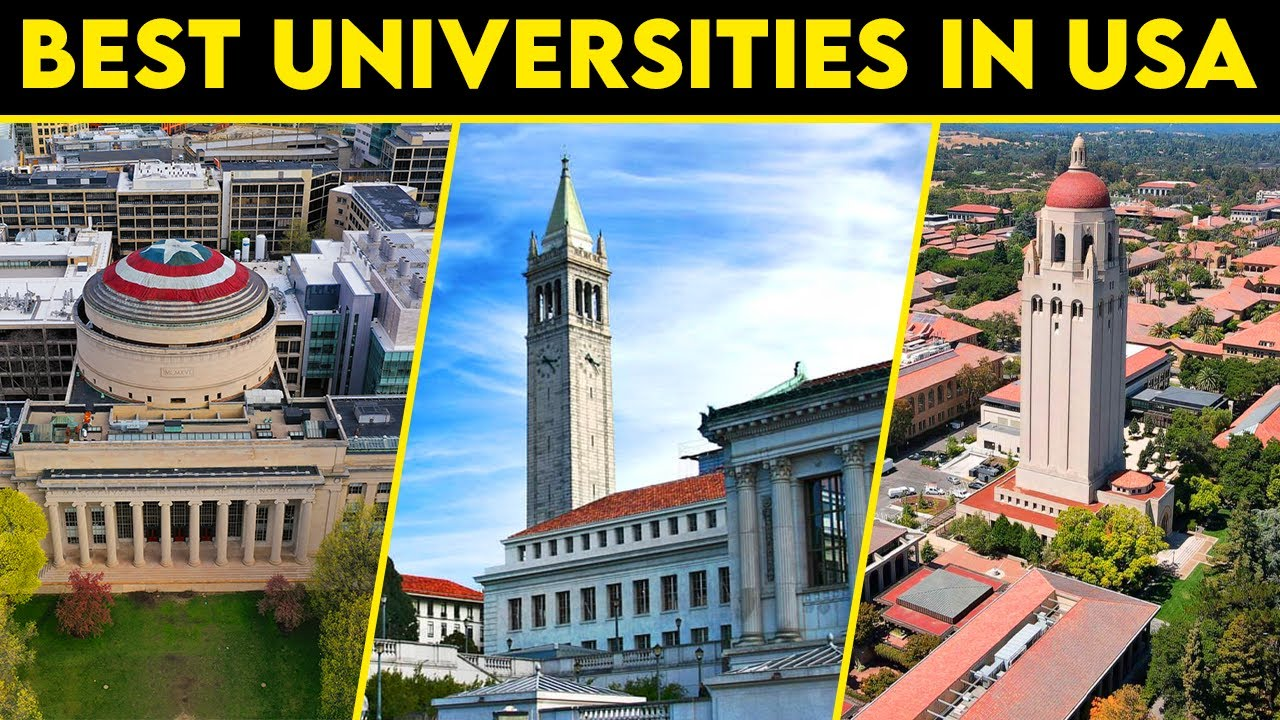
The University of California Berkeley sits at the top of almost every list of best public universities in USA. Its engineering, computer science, and business programs compete directly with the most prestigious private institutions in the country. Nobel laureates on faculty. Research output that shapes entire industries.
UCLA sits alongside Berkeley in the University of California system and consistently ranks among the best public universities in USA for medicine, film, law, and the social sciences.
University of Michigan at Ann Arbor is the standard against which most Midwestern public universities measure themselves. Its business school, law school, and engineering programs are genuinely world class.
University of Virginia was founded by Thomas Jefferson and maintains a reputation for academic rigor and institutional culture that most public universities aspire to match.
University of North Carolina at Chapel Hill combines strong research output with a campus culture that produces graduates who are unusually connected to their institution decades after leaving.
Why Rankings Don’t Tell the Complete Story
Rankings matter. They also mislead.
The best public universities in USA for one student may be completely wrong for another. A ranking that prioritizes research output tells a different story than one that prioritizes undergraduate teaching quality. A ranking focused on graduate employment outcomes produces a different list than one focused on faculty credentials.
Smart students look at multiple ranking systems and weight them against their specific priorities rather than treating any single list as definitive truth. According to US News and World Report, the methodology behind public university rankings considers graduation rates, faculty resources, student selectivity, and financial resources — but none of those metrics directly measure what a specific student will experience inside a specific program.
The Value Argument That Keeps Getting Stronger
Student debt is a genuine crisis in American higher education.
Graduates carrying two hundred thousand dollars in private university debt enter the workforce in a fundamentally different position than graduates carrying forty thousand dollars from a strong public institution. The monthly payment difference affects career choices, housing decisions, family planning, and financial stability for a decade or longer after graduation.
The best public universities in USA offer something the prestige conversation rarely acknowledges directly. The freedom that comes from graduating with manageable debt is itself a form of opportunity. A graduate without crushing loan payments can take risks, change directions, and pursue meaningful work rather than chasing the highest possible salary to service debt.
That calculation is changing how many high-achieving students approach university selection.
What Public University Programs Actually Look Like
The assumption that public universities offer inferior programs to private alternatives doesn’t survive contact with reality.
The University of Michigan’s Ross School of Business sends graduates to the same firms recruiting from Wharton. Berkeley’s computer science program produces engineers hired alongside MIT graduates at the same technology companies. Virginia’s law school places graduates at the same firms recruiting from Yale and Columbia.
The gap between top public and top private universities in USA has narrowed significantly over the past two decades in most professional fields. In some areas it has effectively closed. For a broader look at how education achievement is being measured and supported across different institution types, this overview of education achievement authority explains how accountability frameworks are reshaping how both public and private universities approach student outcomes.
The Research University Advantage
The best public universities in USA are research institutions.
That matters for undergraduate students in ways that aren’t immediately obvious.
Research universities attract faculty who are active contributors to their fields rather than primarily teachers of established knowledge. Those faculty bring current thinking, industry connections, and professional networks into the classroom. Undergraduates at research universities have access to laboratory positions, research assistant roles, and academic publication opportunities that simply don’t exist at teaching-focused institutions.
For students planning graduate or professional school, those research opportunities are not optional extras. They’re competitive necessities.
How to Choose the Right Public University

The right public university is not necessarily the highest ranked one.
Program strength matters more than overall institutional ranking. A university ranked fifteenth nationally with a top five program in your intended field is a better choice than a university ranked fifth nationally with an average program in that same field.
Location matters practically. Public universities often have stronger regional employer relationships than national ones. A strong public university in the state where a student intends to build their career often provides better professional network access than a more prestigious institution two thousand miles away.
Campus culture matters more than most high school students account for. The environment where a student spends four years shapes habits, relationships, and professional identity in ways that extend well beyond the classroom.
In-state versus out-of-state tuition makes a significant financial difference. The best public universities in USA are most financially accessible to residents of their home state. Out-of-state tuition at flagship public universities often approaches private university pricing. Research from The College Board consistently shows that in-state students at public universities graduate with significantly less debt than comparable students at private institutions, with the average difference exceeding forty thousand dollars over four years. For context on how students are researching and discussing public university options together, this piece on education discussion forums captures how peer-driven information sharing is changing how students approach the university selection process.
The States With the Strongest Public University Systems
Some states have invested more seriously in public higher education than others and the results show clearly.
California’s University of California system is the strongest public university network in the country. Berkeley, UCLA, UC San Diego, UC Davis, and UC Santa Barbara collectively cover an enormous range of academic strengths at a level that no other state system approaches.
Michigan built a public university system that consistently punches above its weight relative to state population size. Michigan, Michigan State, and a network of strong regional institutions give Michigan students genuinely competitive options.
Virginia created a public university culture that values academic rigor in a way that distinguishes its flagship institutions from comparable universities in neighboring states.
North Carolina’s Research Triangle universities — UNC Chapel Hill, NC State, and Duke, though Duke is private — created a regional academic ecosystem that attracts research funding and industry partnership at levels most states don’t approach.
What Students Often Get Wrong About Public Universities
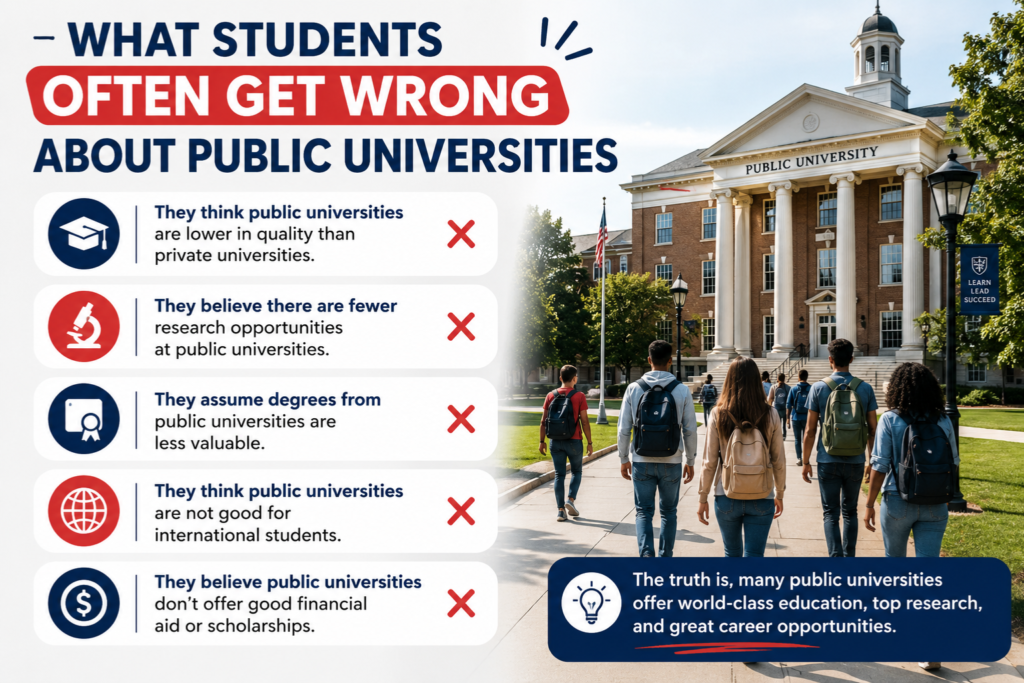
The biggest mistake is treating public universities as the backup option.
For many students the best public universities in USA represent not just the financially smarter choice but the academically better one. A student admitted to a strong public university program and a middling private institution is often making a mistake by choosing the private school for name recognition alone.
The second mistake is assuming all public universities are equivalent. There is an enormous quality range within the public university category. The flagship research universities that appear consistently on best public universities in USA rankings are fundamentally different institutions from regional state universities in the same state system.
The third mistake is not applying to enough public options. Strong students sometimes limit their public university applications unnecessarily, either assuming they won’t be admitted or not recognizing the quality of institutions available to them.
FAQ
What are the best public universities in USA?
UC Berkeley, UCLA, University of Michigan, University of Virginia, and University of North Carolina Chapel Hill consistently rank among the strongest public universities across most major ranking systems.
Are public universities as good as private universities?
Top public universities compete directly with top private institutions in most academic fields. The primary difference is cost, not educational quality, at the flagship level.
How much cheaper are public universities than private ones?
In-state tuition at public universities typically runs between fifteen and thirty thousand dollars per year compared to fifty to eighty thousand at comparable private institutions.
Do employers treat public university degrees differently?
At the top public universities employers treat degrees equivalently to comparable private institutions. Hiring decisions at competitive employers are driven by program reputation and individual achievement rather than public versus private status.
Conclusion
The best public universities in USA are not consolation prizes for students who couldn’t get into elite private institutions.
They are serious academic institutions producing serious graduates at a fraction of the cost of private alternatives.
The prestige conversation in American higher education has distorted how students and families think about university selection in ways that consistently lead to financially damaging decisions without corresponding academic benefits.
A student who graduates from UC Berkeley, Michigan, or Virginia with manageable debt and a strong professional network is in a better position than a student who graduates from a middling private institution with two hundred thousand dollars in loans and a brand name that doesn’t justify the cost.
That’s not an argument against private universities.
It’s an argument for taking the best public universities in USA as seriously as they deserve to be taken.