


Spotlight on Education Fall explores the latest education trends, student success strategies, technology innovations, and learning insights for 2025. Discover practical tips to stay ahead in the evolving educational landscape.
Every fall, the United States education system resets. Backpacks are repacked, syllabi are distributed, and millions of students at every level walk through school doors with a fresh chance to grow. Putting a real spotlight on education fall 2025 means going beyond the headlines and looking at what is genuinely shifting — in classrooms, on college campuses, inside school budgets, and across the mental health landscape that now underpins academic performance.
This guide is built for parents preparing their children for a strong school year, college students entering a new semester, educators navigating rapid change, and anyone who wants to understand the forces reshaping American education right now. It covers enrollment data, classroom technology, student wellness, financial aid, parental involvement, diversity, and more — giving you a complete picture that most education articles simply do not provide.
Fall Enrollment Numbers Matter
Before examining trends, it is worth grounding the conversation in real numbers because scale matters in both education policy and personal planning. An estimated 54.1 million K-12 students and 5.7 million teachers returned to classrooms this fall, with educators making up the majority of the nearly 10 million people working in the nation’s elementary and secondary schools.
At the college level, the recovery from pandemic-era enrollment losses continued steadily. According to the National Student Clearinghouse Research Center, in fall 2025 there were over 19.4 million postsecondary enrollments — 16.2 million undergraduate and 3.2 million graduate students — representing a 1.0 percent increase in total enrollment compared to the previous fall. Community colleges led that growth with a 3.0 percent enrollment increase compared to a 1.4 percent increase at public four-year colleges. These numbers reflect renewed public confidence in higher education and a growing appetite for affordable, flexible academic pathways that fit real lives.
Community Colleges Lead the Way

One of the clearest stories in fall 2025 higher education is the surge in community college enrollment. These institutions have long been undervalued in public conversations about academic prestige, but their value proposition has become impossible to ignore. Lower tuition, proximity to home, flexible scheduling, and clear transfer pathways to four-year universities make community colleges a rational and strategic first choice for a growing number of students.
Undergraduate enrollment growth this fall spanned all age groups, with 18-year-old students up 3.2 percent and adult students aged 25 to 29 seeing gains of 3.3 percent, while those aged 30 and older grew by 2.7 percent. This signals a fundamental broadening of what the typical college student looks like in America. Career-changers, working parents, and returning adults are choosing fall enrollment in record numbers, and community colleges are meeting that demand with expanded online offerings, accelerated certificate programs, and employer partnership pipelines that lead directly to jobs.
AI Has Entered Every Classroom
There is no spotlight on education fall 2025 without a serious discussion of artificial intelligence. AI has moved from theoretical debate into daily classroom practice, and the shift is accelerating. AI tools are helping tailor lessons to individual student needs through differentiated instruction, while teachers are using AI to automate administrative tasks and free up more time for direct student engagement.
The federal government has taken a clear position on this transformation. The U.S. Department of Education recently released guidance encouraging schools to explore the use of AI in improving student outcomes, provided that implementation is guided by ethical standards and human oversight. For students, this means AI literacy is now a baseline expectation rather than a bonus skill. Students are using AI tools for everything from research assistance to study planning, creating new learning opportunities while raising important questions about how AI and academic integrity can coexist. Schools that address these questions openly and thoughtfully produce students who use these tools responsibly and strategically.
Student Mental Health Is Central
Mental health has become one of the defining issues of the modern academic experience, and fall semester is when the pressure tends to peak. New environments, new expectations, and the shift from summer routines to academic structure can trigger anxiety and stress at every age level. The mental health crisis continues to intensify, with students reporting unprecedented levels of anxiety and depression. What has changed is the response — students are now more vocal about their needs and expect proactive, accessible mental health resources from their schools and universities.
Schools are increasingly incorporating social-emotional learning and mindfulness into the curriculum, while teachers play a crucial role in supporting student well-being alongside their academic duties. Peer support programs are becoming just as critical as traditional counseling services. The most effective schools treat mental wellness not as an add-on but as a core pillar of academic success. If your child is struggling emotionally at the start of fall semester, early communication with teachers and school counselors is the single most impactful step a family can take.
Key Trends Shaping Fall 2025
Several major forces are defining what education looks like across the country this fall. Shifting enrollments present real challenges for many school systems as declining birth rates result in lower student populations, which public schools are now in greater competition to attract and retain. Beyond demographics, technology and federal policy are both reshaping the classroom landscape in ways that will be felt for years.
Debates over the role of smartphones in school, increased attention on cognitive skill development, and the push for real-world readiness are all part of the conversation this fall. Hybrid and blended learning models continue to be popular choices, combining the flexibility of online instruction with the community value of in-person schooling. Schools that implement these models thoughtfully give students the best of both environments and the adaptability that the modern workforce demands.
Back to School Preparation Tips
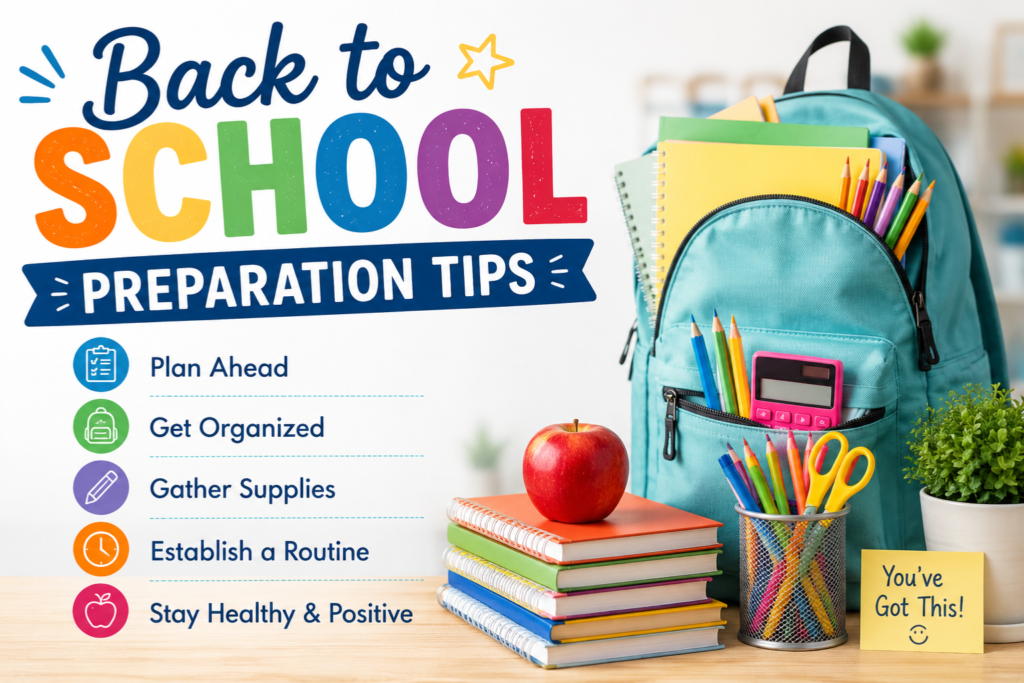
Preparation before the first day of school dramatically improves outcomes for students of all ages. For K-12 students, the transition into fall goes much more smoothly when families establish routines early. Adjusting sleep schedules one to two weeks before school starts, visiting the school building before orientation day, and organizing supplies in advance all reduce first-day anxiety and build confidence heading into the year.
For college students, the preparation process looks different but is equally important. With rising costs and economic uncertainty, students are making more strategic choices about their education, seeking shorter pathways to employment and increasingly combining work with studies. Before the semester begins, review your course schedule, identify professor office hours, locate tutoring and writing centers on campus, and introduce yourself to your academic advisor. These small investments of time pay significant dividends throughout the semester and well beyond it.
Digital Learning Tools for Fall
Technology in the classroom has moved far beyond smartboards and laptops. Today’s most effective educational technology platforms offer personalized learning pathways, real-time progress tracking, and adaptive content that responds to how each student performs. Post-pandemic students expect seamless digital experiences across all touchpoints — from course registration to academic support — and institutions that deliver on that expectation see stronger retention and satisfaction rates.
For parents of younger children, free tools like Khan Academy and Google Classroom offer solid ways to reinforce learning outside of school hours. For high school and college students, online learning platforms allow learners to develop professional skills alongside core coursework. You can explore some of the best resources for distance learning that are currently helping students at every level study more effectively and stay ahead of their coursework. The fall semester is the ideal time to build a digital learning routine that complements classroom instruction rather than replacing it.
The Role of Teachers in Fall 2025
Teachers remain the single most influential factor in student success, yet they are navigating an increasingly complex professional environment. Female teachers in 2025 are more likely to report frequent job-related stress than male colleagues, with the gender gap in reported stress reaching 22 percentage points — larger than in most other professions. The K-12 teaching workforce is approximately 75 percent female, which means this stress burden falls disproportionately on the majority of classroom educators.
Supporting teachers means more than distributing classroom resources. It means providing meaningful mental health support, competitive compensation, reduced administrative burdens, and professional development that actually reflects the challenges teachers face daily. Schools that invest in teacher retention consistently produce more stable and higher-performing academic environments. For parents, maintaining open and appreciative communication with teachers builds the kind of partnership that directly benefits students throughout the year.
College Enrollment Shifts Explained
The college enrollment picture in fall 2025 reveals important shifts in where and how Americans pursue higher education. Private four-year institutions saw declines in undergraduate enrollment this fall, with nonprofit private schools down 1.6 percent and for-profit institutions down 2.0 percent. Meanwhile, public institutions and community colleges thrived, drawing students who prioritize value, flexibility, and direct career alignment over institutional brand.
These shifts are not random. They reflect a generation of students and families that is more financially aware, more skeptical of credential inflation, and more focused on return on investment than previous generations. The rise of short-term certificates, dual-enrollment high school programs, and employer-sponsored education partnerships is reshaping what fall enrollment looks like across America and what it means for long-term career outcomes.
Spotlight on STEM Education Fall
STEM education continues to be a national priority each fall as workforce demand for technical and analytical skills grows faster than the education system can supply graduates. The demand for professionals in cybersecurity, data science, software engineering, healthcare technology, and biomedical research is outpacing supply in nearly every region of the country.
Many school districts are launching new STEM-focused programs this fall, ranging from coding clubs in elementary schools to dual-enrollment engineering courses in high school. Staying current with the latest STEM education news can help parents and educators identify which programs are producing real results and which innovations are worth adopting in local schools. Parents can further support STEM interest at home by encouraging curiosity, providing access to building kits or coding platforms, and discussing science topics found in everyday news coverage.
Financial Aid and Fall Deadlines
One area consistently overlooked in education coverage is the financial dimension of fall enrollment. Many students and families leave significant aid on the table simply because they miss deadlines or do not know where to look. For college students, the FAFSA is the essential starting point and should be filed as early as possible — even before fall classes begin — because early filers often receive larger award packages from institutional funds that operate on a first-come basis.
Scholarships with fall application deadlines are abundant but require proactive research. Employers, community foundations, professional associations, and civic organizations all offer awards specifically for students beginning studies in the fall semester. High school students should work with their guidance counselors to build a scholarship tracking system and check for new opportunities monthly. Community college students in particular often overlook institutional grants that could substantially reduce or eliminate their tuition costs without any repayment obligation.
Parental Involvement and Academic Success

Research consistently shows that parental involvement is one of the strongest predictors of academic success at every grade level. During the fall semester, this involvement is especially powerful because it sets the tone for the entire academic year. Attending back-to-school nights, joining the parent-teacher organization, reviewing homework and reading logs weekly, and asking specific rather than general questions about what your child is learning all signal to students that education matters at home, not just at school.
For parents of college students, the balance shifts toward emotional and logistical support rather than direct academic oversight. Regular check-ins that focus on well-being, financial situation, and campus experience — rather than grades alone — tend to produce healthier and more motivated learners. The start of fall semester is a natural moment to reestablish those conversations after summer and remind your student that support is always available.
Diversity and Inclusion in Fall Classrooms
American classrooms in fall 2025 are more diverse than at any previous point in the nation’s history. Hispanic, Black, and multiracial students are continuing to see enrollment growth at both undergraduate and graduate levels. This demographic shift calls for culturally responsive teaching practices, diverse curriculum representation, and inclusive school environments where every student sees their background reflected meaningfully in what they are asked to learn.
Schools that invest in diversity and inclusion initiatives during the fall semester consistently report higher student engagement, lower dropout rates, and stronger academic performance across all demographic groups. Teachers who receive culturally responsive training are far better equipped to serve the full range of learners in their classrooms and to create the kind of environment where every student feels capable of succeeding.
Extracurricular Activities This Fall
Extracurricular activities are not simply enrichment — they are academically and professionally strategic. Fall is typically the season when clubs, sports, student government, and arts programs launch new membership drives, and students who get involved early tend to stay involved throughout the year. Students who participate in at least one extracurricular activity consistently develop stronger time management skills, broader social networks, and higher grade point averages than those who do not.
For high school students, fall activities like debate club, robotics, theatre, and varsity sports build the kind of well-rounded profile that college admissions offices actively seek. For college students, joining professional student organizations, research labs, or campus leadership programs during the fall semester creates internship opportunities and employer connections long before graduation day arrives.
Special Education and Accessibility
Every fall, hundreds of thousands of students with learning differences, physical disabilities, and developmental needs begin a new school year with Individualized Education Programs or 504 plans in place. Families who meet proactively with special education coordinators before or at the very start of fall semester can ensure that accommodation plans are fully activated from day one rather than taking weeks to implement.
Schools are increasingly using assistive technology — including text-to-speech software, screen readers, and adaptive learning platforms — to support students with diverse needs. Educators trained in universal design for learning are better positioned to serve all students in inclusive classroom settings. Families should advocate early and consistently to ensure their child’s documented needs are met at the start of every fall semester without unnecessary delay.
Looking Ahead After Fall
Fall is not just the start of an academic year — it is the foundation that determines outcomes for the months and years that follow. The choices made in August and September echo through spring semester performance, graduation rates, and early career trajectories. Students who arrive prepared, supported, and informed about the trends shaping their education are positioned to outperform peers regardless of the challenges that arise.
According to the National Center for Education Statistics schools that align their fall planning with current research on student outcomes — including mental health support, technology integration, and inclusive practices — consistently produce better results for students across all backgrounds and income levels. The fall semester window for making strong foundational choices is short. Using it well is one of the highest-leverage decisions any student, family, or educator can make.
Conclusion
This fall, American education stands at a crossroads defined by opportunity and challenge in equal measure. Enrollment is growing at community colleges. AI is reshaping how students learn and how teachers teach. Mental health has become central to academic strategy rather than a peripheral concern. Teachers need support just as much as the students they serve. And parents who stay genuinely engaged see measurable results in their children’s performance and confidence.
The spotlight on education fall 2025 reveals a system in real transformation — not the slow, incremental kind, but the kind that requires everyone involved to pay close attention and act with intention. Whether you are enrolling in your first college course, sending a child to kindergarten, returning to school as an adult, or teaching a classroom of students who arrived with AI tools already in their pockets, fall is the season that sets the stage for everything that follows.
The most successful students and schools in fall 2025 share one common trait: they do not wait for the academic year to shape them. They shape it. Start early, build strong habits, use technology responsibly, prioritize mental wellness, and stay connected to your educational community. Fall is not just a season. In education, it is a defining moment — and this year, more than ever, it is worth getting right.
FAQ
Q1: What does spotlight on education fall mean?
It refers to a focused examination of the key trends, data, challenges, and opportunities shaping American education as the fall academic semester begins across K-12 schools, colleges, and universities.
Q2: How many students enroll in school during fall in the US?
In fall 2025, approximately 54.1 million K-12 students returned to school, while over 19.4 million students enrolled in postsecondary institutions nationwide.
Q3: What are the biggest education trends this fall?
The top trends include AI integration in classrooms, rising student mental health concerns, enrollment growth at community colleges, hybrid learning models, and expanding STEM programs across all grade levels.
Q4: How can parents support their children at the start of fall semester?
Parents should establish routines early, attend back-to-school events, maintain regular contact with teachers, review homework consistently, and monitor their child’s emotional well-being throughout the semester.
Q5: Is community college enrollment growing in fall 2025?
Yes. Community college undergraduate enrollment rose by 3.0 percent in fall 2025, making it the fastest-growing sector of American higher education this year.
Q6: How is AI affecting students in fall 2025?
AI is being used for personalized learning, research assistance, study planning, and administrative automation. Schools are actively working to balance its educational benefits with strong academic integrity policies.