

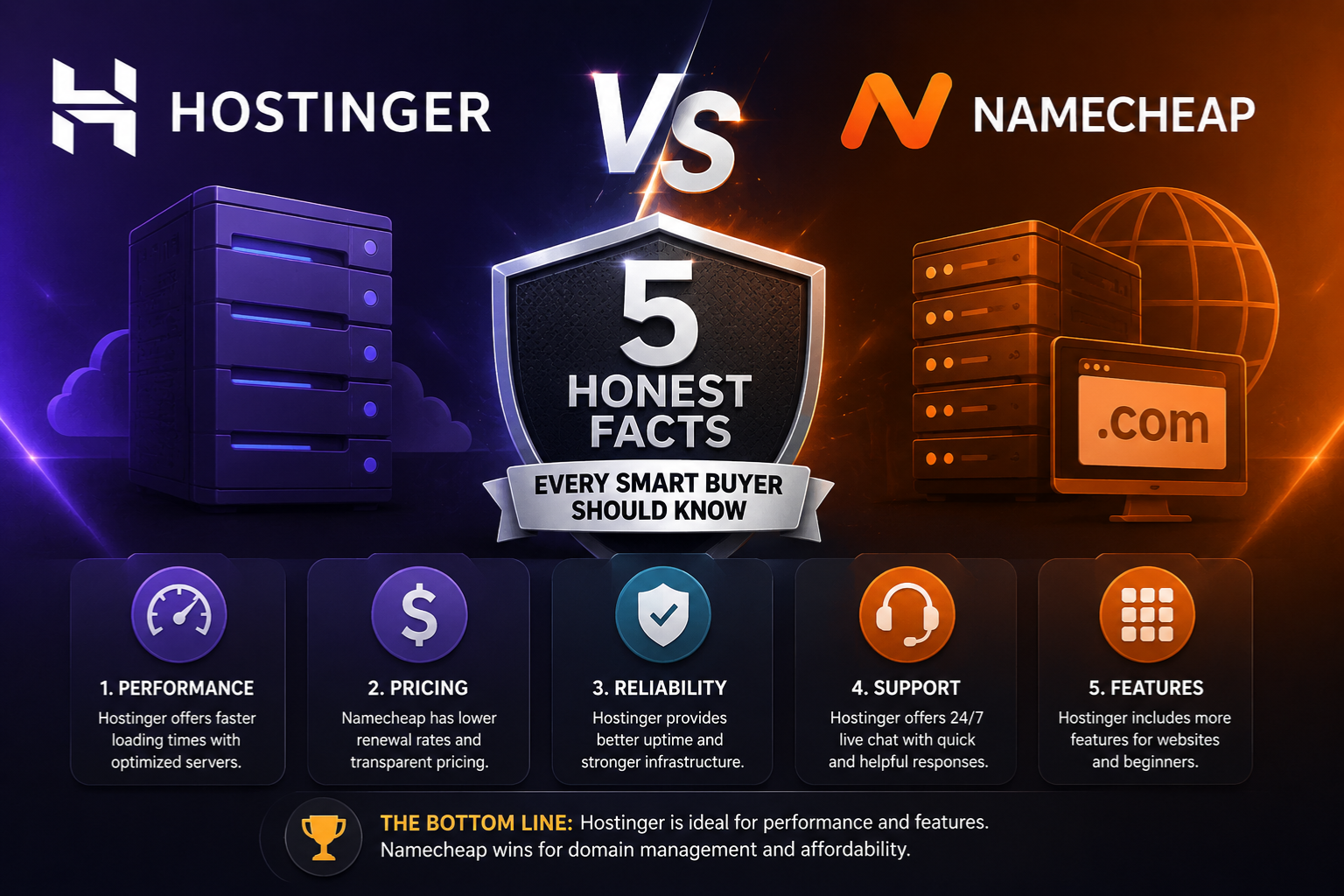
Discover the real hostinger vs namecheap differences in pricing, speed, support, and features to choose the best platform for your website needs.
When you’re starting a website, two names come up almost every single time — Hostinger and Namecheap. Both are popular, both are affordable, and both promise to make your online life easier. But they are not the same thing, and picking the wrong one can cost you more than just money. It can cost you time, speed, and a lot of headaches down the road.
This article breaks down the real differences between these two platforms so you can make a decision that actually fits your situation. Whether you’re launching a blog, a small business site, or an online store, there’s a clear winner for each use case — and we’ll get into all of it.
Hostinger vs Namecheap Origins
Before getting into the details, let’s set the scene. Hostinger started in Lithuania back in 2004 and has grown into one of the largest web hosting companies in the world, serving over 29 million users across 178 countries. That’s not a small operation. They built their entire brand around affordable hosting with solid performance — and for the most part, they’ve delivered on that promise.
Namecheap, on the other hand, launched in 2000 and made its name primarily as a domain registrar. Over time, they expanded into hosting, email, SSL certificates, and other web services. But their identity has always been rooted in domains first, hosting second. That distinction matters a lot when you’re comparing the two, because their strengths come from very different directions. Check out this guide on online services for business to understand how platforms like these fit into a broader digital strategy.
Pricing Plans Side by Side
Let’s talk money, because that’s usually the first thing people look at. Hostinger’s shared hosting starts at around $2.99 per month for their single plan, but the real value kicks in at their Premium plan, which runs about $3.99 per month and includes unlimited websites, free domain, and a free SSL certificate. Their Business plan sits around $5.99 per month and adds daily backups and more resources.
Namecheap’s Stellar plan starts at roughly $1.98 per month, which sounds cheaper on the surface. But once you dig into the renewal rates, the story changes. Namecheap’s renewal prices jump noticeably, and the introductory rates don’t last forever. Hostinger also has renewal price increases, but their overall value at renewal still tends to hold up better for most buyers. When doing the hostinger vs namecheap pricing comparison over a three-year period, Hostinger usually comes out ahead on total cost for hosting specifically.
Performance and Speed Comparison
Speed is not just a nice-to-have anymore — it directly affects your Google rankings and how long visitors stay on your site. Hostinger runs on LiteSpeed servers with built-in caching, and their average response times consistently clock in under 200 milliseconds in most independent tests. That’s genuinely fast for shared hosting in this price range.
Namecheap uses a mix of server types depending on the plan, and their performance is decent but not as consistent. In some speed tests, Namecheap’s servers have shown response times between 300 and 500 milliseconds, which is acceptable but not impressive. If your website traffic is growing and you care about user experience, the speed gap between these two platforms is real and worth factoring into your decision. Hostinger wins this round clearly in the hostinger vs namecheap performance debate.
Uptime Reliability You Can Trust
Nobody wants their website going down in the middle of the day. Hostinger advertises a 99.9% uptime guarantee, and third-party monitoring tools back that up — most reports show them hitting 99.93% to 99.99% uptime over extended periods. That’s solid and reliable for a shared hosting provider at this price point.
Namecheap also promises 100% uptime on their website, which sounds amazing until you read the fine print. Real-world uptime for Namecheap tends to hover around 99.96%, which is still excellent. The honest truth is that both platforms are reliable when it comes to uptime. This is one area where the hostinger vs namecheap battle ends in a near-tie, though Namecheap’s marketing language overpromises a bit.
Domain Registration and Management
Here’s where Namecheap genuinely shines. Domain registration is their core business, and it shows. They offer some of the most competitive domain prices in the industry — a .com domain typically costs around $8.88 for the first year through Namecheap, and renewals are also reasonably priced. Their domain management dashboard is clean, intuitive, and easy to use even for beginners.
Hostinger offers free domain registration with several of their hosting plans, which is a great deal if you’re starting fresh. But if you already have a domain or plan to manage multiple domains separately, Namecheap gives you more flexibility and better tools. For pure domain management, Namecheap is the stronger platform. According to Forbes, Namecheap consistently ranks among the top domain registrars for small business owners because of its pricing transparency and ease of use.
Control Panel and Dashboard Experience
Hostinger built their own custom control panel called hPanel. It’s clean, modern, and honestly one of the better dashboards in the budget hosting world. Everything is laid out logically, and even complete beginners can find what they need without too much confusion. Installing WordPress takes about 90 seconds through their one-click installer.
Namecheap uses cPanel, which has been the industry standard for years. Experienced users often prefer cPanel because they already know where everything is. But for newcomers, cPanel can feel cluttered and overwhelming. This one really comes down to personal preference. If you’re new to hosting, Hostinger’s hPanel feels friendlier. If you’ve used cPanel before and like it, Namecheap’s setup will feel familiar. In the hostinger vs namecheap usability comparison, Hostinger edges ahead for beginners.
Customer Support Quality
Support matters most when something breaks at 2 AM and your site is down. Hostinger offers 24/7 live chat support across all plans, and their response times are typically fast — usually under 2 minutes during peak hours. Their support team is generally knowledgeable, and they also have an extensive knowledge base with tutorials and guides.
Namecheap also offers 24/7 live chat, but the quality can be inconsistent. Some users report great experiences while others mention long waits and agents who struggle with more technical questions. Namecheap does have a good ticketing system and a solid knowledge base, but for real-time help when things go wrong, Hostinger tends to come out ahead. This is a real differentiator in the hostinger vs namecheap support comparison.
WordPress Hosting Features
WordPress powers over 43% of all websites on the internet, so how well a host handles it matters enormously. Hostinger has a dedicated WordPress hosting tier with LiteSpeed cache pre-configured, automatic updates, and a managed environment that keeps things running smoothly. Their WordPress starter plan includes everything most bloggers and small businesses actually need.
Namecheap offers EasyWP, which is their managed WordPress product. It’s simple and works fine for basic sites, but it lacks some of the performance features Hostinger includes by default. EasyWP is priced separately from regular shared hosting, starting at around $3.88 per month. For WordPress specifically, the hostinger vs namecheap comparison leans toward Hostinger because of better performance tools, tighter integration, and more transparent pricing.
Email Hosting Capabilities
Both platforms offer email hosting, but the approach is different. Hostinger includes email hosting with their shared hosting plans, and you can set up professional email accounts through their hPanel. It works fine for basic needs, though it’s not as feature-rich as dedicated email services. For most small business owners, it does the job without any extra cost.
Namecheap sells email hosting as a separate product called Private Email, starting at around $1.24 per month per mailbox. It’s affordable and includes spam filtering, two-factor authentication, and decent storage. If you want a more polished email experience, Namecheap’s Private Email is worth considering. For businesses that rely heavily on email, Namecheap gives you more dedicated email infrastructure, though it adds to your overall cost.
Security Features and SSL
Security should never be an afterthought. Hostinger includes a free SSL certificate with all hosting plans, along with a web application firewall, malware scanning, and DDoS protection. Their Business and Cloud plans add automatic daily backups, which is a feature that can literally save your website if something goes wrong.
Namecheap also provides a free SSL certificate via Let’s Encrypt on most plans. They sell premium SSL certificates as well, which is useful for eCommerce sites that need more robust security credentials. Namecheap also has a decent security setup, but their free plan doesn’t include the same level of built-in malware scanning that Hostinger offers. For security out of the box, Hostinger gives you a bit more without requiring upgrades.
Scalability as Your Site Grows
Starting small is fine, but what happens when your traffic doubles? Hostinger offers a clear upgrade path from shared hosting to VPS and cloud hosting, all managed within the same dashboard. Their Cloud Startup plan, for example, gives you dedicated resources without the complexity of managing a full server. The transition is smooth and doesn’t require migrating to a completely different platform.
Namecheap also offers VPS and dedicated server options, but the jump from shared hosting to VPS feels less seamless. Their VPS plans are competitively priced, but the management interface is more technical and may require more hands-on server knowledge. If you’re planning for growth from day one, Hostinger’s ecosystem makes scaling easier. In the long-term hostinger vs namecheap scalability debate, Hostinger gives most users a smoother path forward.
Hostinger vs Namecheap Refund Policy
Nobody talks about refund policies until they need one. Hostinger offers a 30-day money-back guarantee on hosting plans, which gives you a solid month to test the platform with no financial risk. If you’re not happy, you get your money back — no complicated process.
Namecheap offers a slightly shorter refund window of 14 days on shared hosting plans. Domain purchases are generally non-refundable, which is standard across the industry. If you’re the type who likes to test things thoroughly before committing, Hostinger’s 30-day window gives you more breathing room. It’s a small difference but a meaningful one when you’re spending real money.
Who Should Choose Hostinger
Hostinger is the better pick if you want fast hosting, a clean dashboard, strong WordPress performance, and solid support — all at a price that doesn’t hurt your wallet. It’s especially good for beginners who are launching their first website and want everything handled in one place. The free domain, free SSL, and LiteSpeed servers make the package genuinely hard to beat at this price level.
It’s also a smart choice for small business owners who want to grow their site over time without switching platforms. The hostinger vs namecheap decision for performance-focused buyers almost always tips toward Hostinger. If speed, support, and ease of use are your top priorities, this is your platform.
Who Should Choose Namecheap
Namecheap makes more sense if domains are your primary focus. If you’re managing multiple domains, need more control over DNS settings, or just want a reliable and affordable domain registrar, Namecheap is excellent. Their domain prices are competitive, their management tools are strong, and their interface for handling lots of domains is genuinely better than Hostinger’s.
Namecheap is also a reasonable choice if you already know cPanel well and want a familiar environment. Their separate email hosting product is also worth considering for businesses that want dedicated email infrastructure. The hostinger vs namecheap verdict for domain-heavy users still points to Namecheap as the more specialized and capable domain management platform.
Final Verdict on Both Platforms
After comparing everything — pricing, speed, support, domains, email, security, and scalability — the honest answer is that there’s no universally perfect choice. Both platforms are legitimate, both are widely used, and both have real strengths. The right one depends entirely on what you’re actually trying to do.
If you’re building a website and want the best all-in-one hosting experience at a low price, Hostinger wins the hostinger vs namecheap battle. If domains are your main game and you want a trusted registrar with flexible tools, Namecheap is the smarter move. Many users actually use both — Namecheap for domain registration and Hostinger for hosting — which is a perfectly valid approach.
Frequently Asked Questions
Is hostinger vs namecheap a close comparison for beginners?
For beginners, Hostinger is generally the easier platform to start with. Their hPanel is more intuitive, their onboarding process is smoother, and their support is more responsive. Namecheap is also beginner-friendly for domain management, but their hosting interface can feel more complex for someone just starting out.
Which platform offers better value for money overall?
Hostinger offers better value for hosting specifically, especially when you factor in the free domain, free SSL, and LiteSpeed speed advantages. Namecheap offers better value for domain registration and management. If you only need hosting, Hostinger wins on value. If you need a domain registrar, Namecheap is the smarter spend.
Does Namecheap offer free hosting with domain purchase?
Namecheap does not typically offer free hosting with domain purchases, though they occasionally run promotional bundles. Their hosting and domain products are priced separately, which means you need to budget for both independently. Hostinger bundles a free domain with several of their hosting plans, making it a better deal for new website owners starting from scratch.
Can I transfer my domain from Namecheap to Hostinger?
Yes, domain transfers between registrars are standard and both platforms support the process. You’ll need to unlock your domain at Namecheap, get the transfer authorization code, and then initiate the transfer through Hostinger. The process usually takes 5 to 7 days to complete and costs around the price of a one-year domain renewal.
Conclusion
The hostinger vs namecheap debate doesn’t have one definitive winner — it has two different winners for two different needs. Hostinger is the stronger hosting platform, full stop. Better speed, better support, better WordPress experience, and a smoother overall package for anyone building and growing a website. If that’s what you’re after, Hostinger is worth every penny.
Namecheap, on the other hand, earns its reputation as a top-tier domain registrar. Their pricing is fair, their tools are powerful, and if you’re managing a portfolio of domains, they’re hard to beat. The smartest move for many website owners is to use both platforms for what each does best. Register your domain with Namecheap, host your site on Hostinger, and you get the strengths of both without being locked into either one’s weaknesses. Whatever you decide, both platforms are reliable choices backed by years of industry experience and millions of satisfied users.