

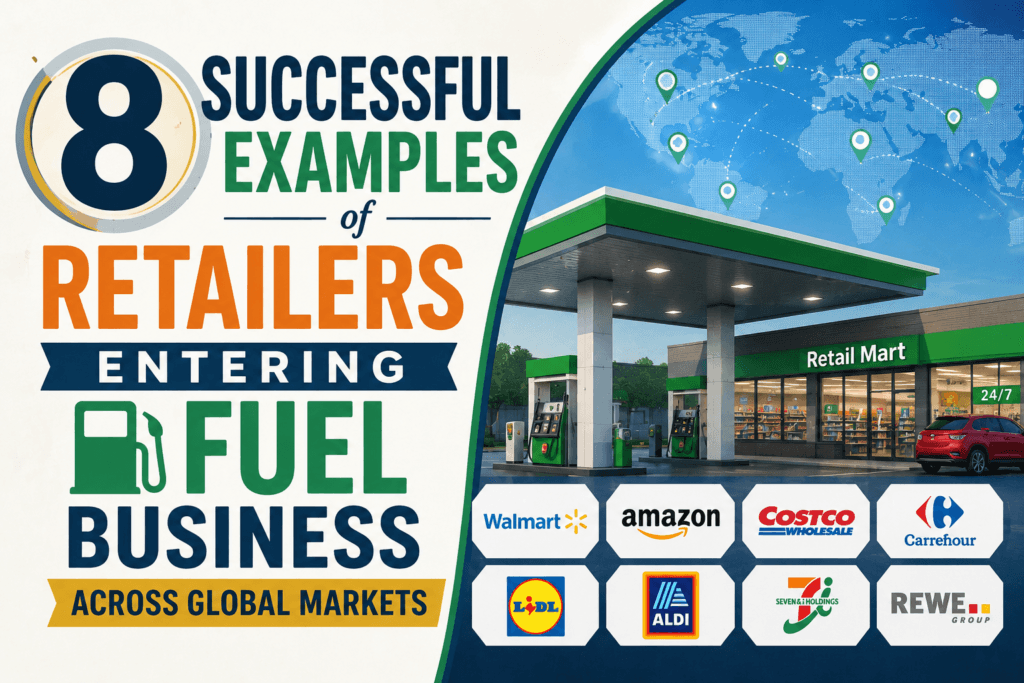
The trend of retailers entering fuel business across global markets has completely reshaped how consumers buy petrol. Major grocery chains and warehouse clubs have moved well beyond their traditional categories to offer fuel directly at their store locations, changing the competitive landscape permanently.
Retailers entering fuel business across different regions have done so with a clear commercial purpose. Adding forecourts to existing store locations created a compelling convenience offer that strengthened customer loyalty, increased visit frequency, and opened entirely new revenue channels alongside traditional retail operations.
Global Shift in Retail
The global movement of retailers entering fuel business across multiple continents gained serious momentum during the 1990s and 2000s. As supermarket chains expanded their physical footprints, large out-of-town store formats provided the space needed to build petrol stations without disrupting existing store layouts.
This shift was not limited to one country or region. Retailers entering fuel business across the United Kingdom, United States, Australia, and France each found different local dynamics, but the underlying commercial logic remained consistent — fuel is a high-frequency purchase that brings customers back on a regular basis.
Tesco Leads British Market
Tesco stands as one of the earliest and most successful cases of retailers entering fuel business across the United Kingdom. The supermarket giant launched its first petrol stations in the 1970s and steadily grew its forecourt network across hundreds of large store locations throughout Britain over the following decades.
What made Tesco’s approach exceptionally effective was its deep integration with the Clubcard loyalty scheme. Customers who purchased fuel earned points redeemable in-store, which created a powerful incentive loop that kept shoppers coming back. Retailers entering fuel business with loyalty program tie-ins consistently outperformed those treating fuel as a completely standalone category.
Costco Disrupts Fuel Pricing
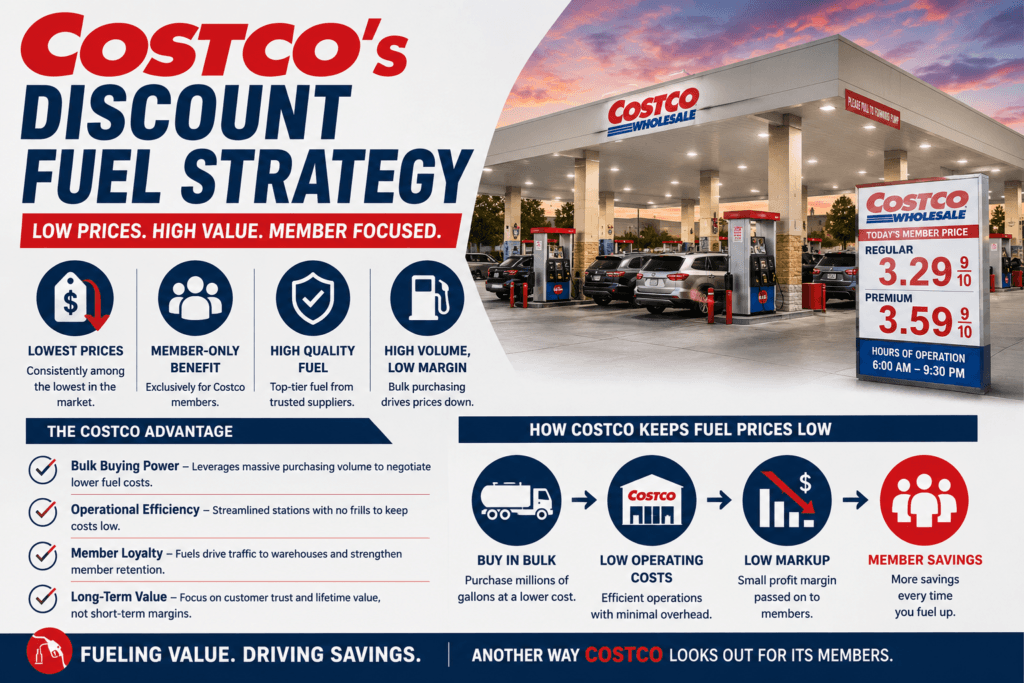
Costco became one of the most widely discussed cases of retailers entering fuel business through its aggressive low-price fuel strategy. By offering petrol consistently below the prevailing market rate, Costco used fuel as a membership driver that justified the annual subscription fee for millions of households worldwide.
Long queues at Costco forecourts became a familiar sight across the United States, Canada, the United Kingdom, and Australia. Retailers entering fuel business with a discount-first pricing model, as Costco clearly demonstrated, can transform the forecourt into one of their most powerful tools for member acquisition and long-term retention.
Walmart Applies Low Price Logic
Walmart brought its famous everyday low-price philosophy directly to the fuel sector when it began adding petrol stations at Supercenter locations in the early 2000s. As one of the most prominent retailers entering fuel business across America, Walmart positioned fuel savings as a natural extension of its core brand promise to customers.
The rollout was closely tied to Walmart’s massive store network and later integrated with the Walmart+ membership program, which offered fuel discounts as a headline benefit. Retailers entering fuel business with membership-linked discount schemes found that fuel became one of the strongest arguments for customers to maintain their paid subscription year after year.
Carrefour Expands Across Europe
Carrefour brought the well-proven model of retailers entering fuel business across European markets, operating petrol stations attached to its vast network of hypermarkets in France, Spain, Belgium, and several additional countries. The French retail giant used affordable fuel to drive regular visits to its large-format stores.
Carrefour linked petrol discounts directly to in-store spending thresholds, encouraging shoppers to spend more in order to access cheaper fuel at the pump. This mechanic proved highly effective in price-sensitive markets and helped Carrefour position itself as a strong alternative to traditional fuel retailers operating across the continent.
Sainsbury’s Forecourt Network Growth
Sainsbury’s followed the well-established path of retailers entering fuel business across the United Kingdom by building a significant forecourt network across its larger supermarket sites. The company offered competitive fuel pricing that attracted regular shoppers who wanted to combine their weekly grocery trip with a convenient fill-up.
The Nectar loyalty card was absolutely central to Sainsbury’s fuel proposition. Points earned at the pump could be spent in-store or with partner brands, giving customers a clear financial benefit. Retailers entering fuel business with multi-partner loyalty schemes consistently offer broader redemption options that increase the overall perceived value of the fuel reward program.
Kroger Builds Fuel Rewards
Kroger developed one of the most sophisticated examples of retailers entering fuel business through its nationally recognized Fuel Points program. American shoppers earn points on grocery, pharmacy, and selected partner purchases that translate into significant per-gallon discounts at Kroger fuel stations located across the country.
The Fuel Points system created a powerful and self-reinforcing engagement cycle. The more customers spent on groceries, the more they saved on fuel, which encouraged them to consolidate all their shopping at Kroger stores. Retailers entering fuel business with spend-linked reward mechanics effectively turn the forecourt into a strong retention tool for their entire grocery operation.
Coles and Woolworths Australia
In Australia, both Coles and Woolworths became landmark examples of retailers entering fuel business across a highly competitive market. Both supermarket chains partnered with established fuel networks before eventually developing their own branded forecourt operations, reshaping how Australian consumers purchased petrol entirely.
The shopper docket model these two retailers introduced became deeply embedded in Australian consumer culture. A qualifying grocery receipt unlocked a per-litre discount at the pump, which proved enormously popular with price-conscious shoppers. Retailers entering fuel business with spend-triggered discount mechanics created one of the most effective promotional tools the Australian grocery market had ever seen.
Marks and Spencer Fuel Partnerships
Marks and Spencer approached the fuel sector differently from other retailers entering fuel business across the United Kingdom. Rather than building and operating its own forecourts, the premium British retailer partnered with BP to place M&S Food halls inside BP service stations at key locations nationwide.
This partnership model proved mutually beneficial for both companies involved. BP gained a premium food offer that clearly differentiated its stations from competitors, while M&S expanded its food reach without the cost of new standalone stores. Retailers entering fuel business through strategic partnerships, as this example shows, can achieve significant reach without the full capital burden of independent forecourt development.
Loyalty Programs Drive Fuel Success
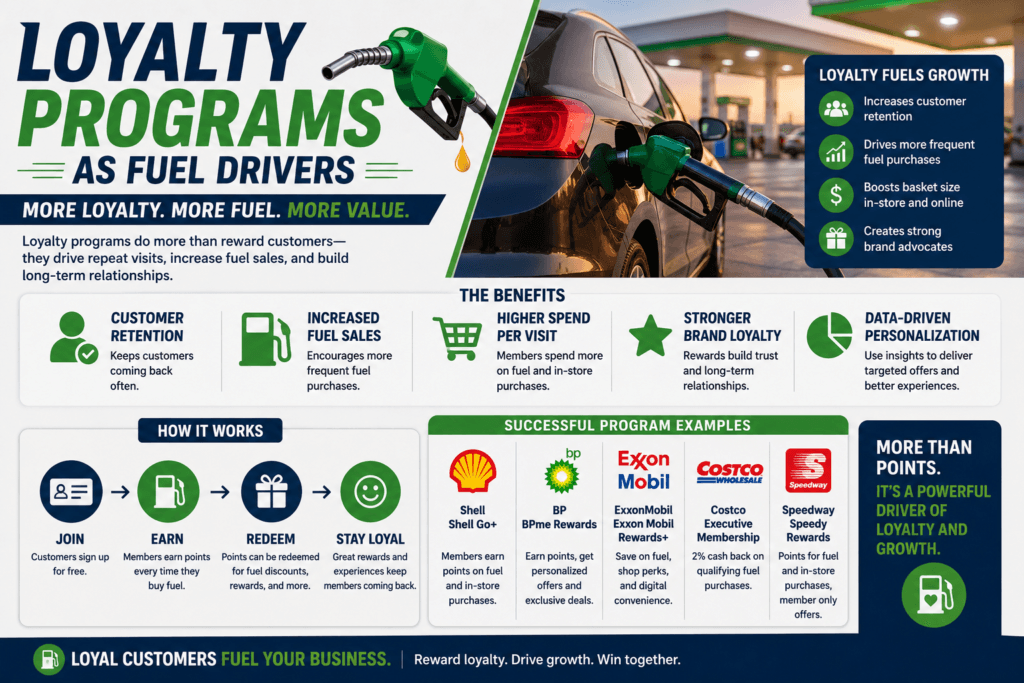
One of the clearest common threads across all successful retailers entering fuel business is the central and critical role played by loyalty programs. Companies that tied fuel discounts or reward points directly to shopping behavior created an incentive loop far more attractive than price alone could achieve.
The data gathered through these loyalty programs also proved commercially valuable beyond the immediate transaction. Retailers entering fuel business gained detailed insight into customer visit patterns, fuel purchase frequency, and the relationship between forecourt visits and in-store spending, allowing them to refine promotions with a level of precision traditional fuel operators could not match.
Infrastructure Advantages Retailers Hold
Retailers entering fuel business held a significant natural advantage over independent operators when it came to site infrastructure. Large supermarkets and hypermarkets already occupied substantial land plots with expansive car parks, making it relatively simple to add a fuel forecourt without major reconfiguration of the existing site.
This ready-made infrastructure dramatically reduced the capital cost of market entry and allowed retail fuel networks to scale quickly across multiple existing locations. Independent fuel station operators, by contrast, faced the considerable expense and time involved in finding, acquiring, and developing entirely new standalone sites in suitable locations.
Regulatory Challenges Along the Way
Not every journey taken by retailers entering fuel business has been without friction. In several markets, competition regulators examined whether supermarket fuel discounts were harming smaller independent stations that could not match the pricing power of large retail chains with millions of loyal shoppers.
Australia’s review of the shopper docket system was among the most prominent regulatory examinations of retail fuel discounting practices globally. These challenges highlighted the broader market impact that retailers entering fuel business can have when they deploy loyalty-linked pricing at significant scale across a concentrated retail market.
Electric Vehicle Transition Ahead
The rapid rise of electric vehicles presents both a genuine challenge and a significant opportunity for retailers entering fuel business who have already invested heavily in forecourt infrastructure. As petrol and diesel demand begins to soften in key markets, the forecourt model must adapt to accommodate EV charging alongside traditional fuel dispensing.
Several major retailers have already responded by installing electric vehicle charging points at their sites. Tesco partnered with charging network providers to bring EV charging to its car parks, while other retailers entering fuel business have begun their own electrification programs. The forecourt of the future will need to serve both combustion engine and electric vehicle drivers simultaneously.
Technology Reshaping Fuel Retail
Technology has become an increasingly important factor for retailers entering fuel business in recent years. Mobile payment apps, digital loyalty integration, and automated pump systems have made the forecourt experience faster and more seamless for customers who expect the same digital convenience they get inside the store.
Retailers entering fuel business with strong digital ecosystems have a clear advantage in this area. Companies like Walmart and Kroger that already had mature retail apps were able to extend fuel payment and reward functionality into those platforms quickly, giving their fuel offer a modern and integrated feel that standalone operators found difficult to replicate.
Amazon’s Potential Fuel Ambitions
Amazon has not yet launched a large-scale fuel retail operation, but its growing physical retail presence makes it a company worth watching in the context of retailers entering fuel business. Through Amazon Go cashierless technology and its Whole Foods network, the company has built capabilities well suited to high-speed forecourt environments.
Industry analysts have consistently pointed to Amazon’s strengths in payment integration, logistics, and customer data as natural fits for the fuel retail sector. If Amazon were to enter the forecourt space, it would represent one of the most significant developments in retailers entering fuel business since Costco first disrupted fuel pricing decades ago.
Frequently Asked Questions
Why are retailers entering fuel business attractive investments? Fuel brings customers back frequently, supports loyalty programs, and adds revenue without requiring retailers to move far from their existing store infrastructure.
Which retailer has the biggest global fuel network? Tesco and Costco operate among the largest retail-owned fuel networks globally, with stations across multiple countries serving millions of customers weekly.
Do retail fuel stations always offer lower prices? Retail fuel stations often offer competitive prices, especially when discounts are linked to loyalty programs or minimum in-store spending requirements.
How are retailers entering fuel business handling EVs? Many retailers are adding EV charging points to forecourts, with Tesco and others partnering with charging networks to serve electric vehicle drivers.
Conclusion and Final Thoughts
The story of retailers entering fuel business across global markets is one of the most compelling commercial transformations of the past half century. From Tesco’s early forecourts in 1970s Britain to Costco’s queue-forming discount pumps and Kroger’s sophisticated Fuel Points program, retailers have proven repeatedly that fuel is a category where they can compete effectively and profitably against specialist operators.
The success of retailers entering fuel business has never been accidental. It has come from the intelligent integration of fuel into loyalty ecosystems, the smart use of existing property assets, and a relentless focus on price competitiveness in a category where consumers are acutely sensitive to even small cost differences. Each example covered in this article reveals a slightly different commercial approach, but the underlying strategy is consistent across all markets.
Looking ahead, retailers entering fuel business will face the defining challenge of managing the energy transition without losing the customer engagement their forecourt networks have built over many decades. Those who invest early in EV infrastructure, digital payment integration, and data-driven forecourt management are best positioned to maintain their competitive advantage. The retailers that entered fuel as a convenience extension now have the scale, the customer relationships, and the infrastructure to lead the next chapter of energy retail across global markets.