
Thinking about switching to a money clip? Here’s an honest look at what works, what to buy, and the mistakes most guys make on their first try.
I’ve watched a lot of guys make the jump from a bulky wallet to a money clip, and honestly, most of them do it wrong the first time. They buy the cheapest one they find, cram in eight cards, and give up within a month. That’s not a money clip problem. That’s a “nobody told them how this actually works” problem.
A money clip is about as simple as an accessory gets — a flat piece of metal, sometimes with a spring or a magnet, built to hold folded bills together without a bulky wallet body around them. But simple doesn’t mean foolproof. There’s a right way to use one, a wrong way, and a handful of details that decide whether you’ll love it or toss it in a drawer by spring.
What Is a Money Clip, Exactly
At its core, a money clip is a compact fastener designed to hold paper currency flat and organized, usually made from metal like stainless steel, brass, silver, or titanium. Some models fold the bills in half; others keep them flat against a card or two. The design hasn’t changed much since the mid-20th century, when men started ditching thick leather billfolds for something that fit a front pocket without printing a brick-shaped outline through their trousers.
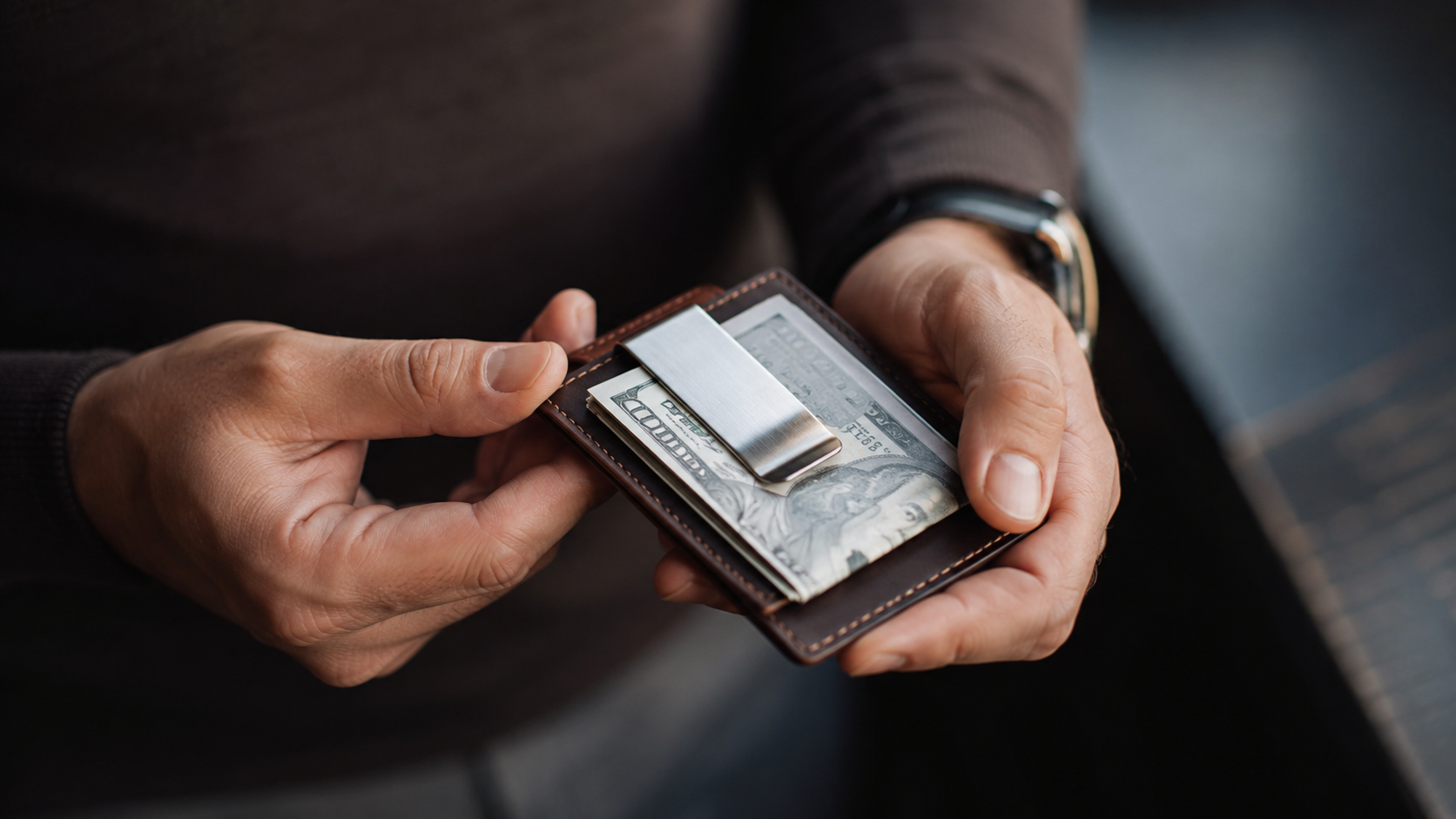
There are a few core mechanisms worth knowing. Spring clips use tension from a coiled or folded piece of metal to grip the bills — these are the classic style and tend to hold the most cash. Magnetic clips use two flat plates with embedded magnets, which look sleeker but can lose grip over time as the magnets weaken. Money clip wallets are a hybrid, combining a slim cardholder with a clip on the back or side, which is honestly what most people end up buying once they realize they still need somewhere for a driver’s license and a couple of cards.
Why It Matters More Than People Think
If your outfit matters to you at all, this is where a money clip actually pulls its weight. For business attire and anything remotely professional, a wallet-shaped lump in your pocket does you no favors — it distorts your trouser line, and it shows. If you care about presenting well, the accessories you wear should look intentional, the same way a properly chosen outfit does in business professional attire or in business casual women settings — smaller, cleaner, more deliberate accessory choices, right down to what’s in your pocket.
There’s a practical side too. A wallet stuffed with receipts, loyalty cards, and a year’s worth of expired coupons is heavier than people realize, and that weight sits unevenly in a back pocket, which over years can actually contribute to posture issues and lower back strain. A money clip forces you to carry less. You physically cannot cram twelve cards and forty dollars in receipts into a flat piece of metal, so it does some of your decluttering for you, whether you meant it to or not.
Common Types and What They’re Actually Good For
Not every money clip suits every guy, and this is where most first-time buyers go wrong — they buy based on looks instead of function.
- Spring clips — strong hold, classic look, best for guys who carry mostly cash and one or two cards.
- Magnetic clips — sleek and thin, but grip weakens with heat and time; better for light use.
- Hybrid card-and-clip wallets — the most practical option for most people since it holds ID, a card or two, and folded bills in one slim unit.
- Money clip knives or multi-tools — a novelty item more than a daily carry choice, though some people genuinely love them.
- Elastic band clips — cheap, stretchy, and honestly not great; they lose elasticity fast and don’t protect the bills.
I’ve tried three of these five myself over the years. The hybrid card-and-clip is what I’ve stuck with, mostly because I got tired of digging through pockets for a stray ID.
How a Money Clip Actually Works Day to Day
Using one is straightforward, but there’s a technique to it that nobody explains upfront. Fold your bills once, largest denomination on the outside if you want quick access, and slide them into the clip so the fold sits at the top edge. Most clips hold anywhere from five to twenty bills comfortably before the tension starts to feel loose or the magnets stop gripping properly.
Cards go in differently depending on the style. Spring clips usually aren’t built for cards at all — cramming a debit card in there will bend the metal over time and eventually snap the spring. Hybrid wallets solve this with a dedicated card slot separate from the clip mechanism, which is honestly the better long-term choice if you carry more than just cash.
Real Benefits Worth Knowing
The size difference alone surprises people. A standard bifold wallet runs roughly half an inch thick when empty and grows from there; a money clip stays under a quarter inch even loaded. That difference matters more than it sounds like it should once you’re sitting in a car for an hour with a wallet digging into your hip.
There’s a cost angle too, and it’s easy to overlook. A decent leather bifold from a mid-range brand runs $40 to $80 and wears out within a couple of years from constant flexing. A solid stainless steel money clip costs $15 to $30 and, because there’s no stitching or leather to break down, can realistically last a decade. I’ve had the same one since 2019.
Security is a smaller point but still real — a flat clip is harder to pickpocket than a bulging back-pocket wallet, since there’s less to grab onto and it sits closer to the body when carried in a front pocket.
Challenges and Honest Limitations
It’s not all upside, and I’d be lying if I said otherwise. Card capacity is the biggest complaint I hear. If you’re the type who carries five loyalty cards, a transit pass, two credit cards, and cash, a basic clip will frustrate you fast. You’ll need a hybrid model or you’ll end up carrying a second slim wallet anyway, which defeats some of the purpose.
Coins are another issue nobody mentions. A money clip has zero coin storage, so if you deal in cash regularly, you’ll need a separate pouch or you’ll just end up with change rattling around in your pocket. And spring clips do wear out — the tension weakens after a couple of years of daily flexing, and eventually bills start slipping out at the edges.
Step-by-Step: Choosing the Right One
Here’s the process I’d actually recommend, based on what tends to go wrong for people:
- Count your cards. If it’s more than three, skip the pure spring clip and go hybrid.
- Decide on material. Stainless steel resists tarnish; brass and silver look sharp but need occasional polishing.
- Check the tension in person if you can, or read reviews specifically mentioning grip strength after months of use — not just out of the box.
- Match it to how you dress. A brushed steel clip suits business casual fine; anything with logos or bright finishes reads more casual.
- Test it for two weeks before deciding it’s not for you. Most people quit in the first week out of habit, not because the product failed them.
Comparison: Popular Money Clip Styles
| Style | Card Capacity | Durability | Typical Price | Best For |
| Spring clip | 0–1 cards | High (metal fatigue over years) | $15–$35 | Cash-heavy carriers |
| Magnetic clip | 1–2 cards | Medium (magnets weaken) | $20–$45 | Minimalists, light use |
| Hybrid wallet-clip | 2–6 cards | High | $25–$60 | Most everyday users |
| Elastic band clip | 1–3 cards | Low | $8–$15 | Budget or backup use |
Practical Examples From Real Use
A friend of mine in sales switched to a hybrid clip after years of a worn-out bifold, mainly because he was tired of it showing through his suit pants during client meetings. Small thing, but it changed how he felt walking into a pitch. Another guy I know, a contractor, went with a basic spring clip because he doesn’t carry cards at all on job sites — just cash for lunch and gas. Different jobs, different needs, same accessory adjusted to fit.
Expert Tips Nobody Tells You Upfront
Store folded cash with the largest bill facing out if you tip often — saves you from fumbling. Buy stainless steel if you live somewhere humid; brass and silver tarnish faster than people expect. And here’s one worth mentioning: rotate which pocket you carry it in every so often. Constant pressure in the same spot wears down trouser fabric faster than most people realize.
Common Mistakes to Avoid
People overload thin spring clips with too many cards, which bends the metal permanently within months. They also buy the flashiest design instead of the one that matches their actual wardrobe, so it ends up looking mismatched more often than not. Skipping the two-week adjustment period is another one — muscle memory takes time to catch up to a new habit, and a lot of people quit right before it clicks.
FAQs
Is a money clip better than a wallet?
It depends on how much you carry. For light carriers with two or three cards, yes — it’s slimmer and cheaper long term. Heavy card users usually do better with a hybrid or a slim cardholder instead.
How many bills can a money clip hold?
Most spring and magnetic clips comfortably hold five to twenty folded bills before losing grip. Beyond that, the tension weakens and bills can slip out.
Do money clips damage cash?
Not typically. Folding bills once doesn’t harm them, though repeated folding in the exact same spot over years can eventually weaken that crease.
What material lasts the longest?
Stainless steel and titanium hold up best against daily wear and won’t tarnish. Brass and sterling silver look great but need occasional cleaning to avoid discoloration.
Can I carry a money clip and a wallet together?
Some people do, using the clip for cash and a slim front-pocket wallet for cards. It’s not the minimalist ideal, but it works fine for anyone who needs more capacity.
Conclusion
A money clip isn’t a magic fix, and it’s not for everyone — if you carry a stack of cards daily, you’ll probably want the hybrid style rather than a plain spring clip. But for anyone tired of a wallet-shaped lump ruining their pocket line, it’s a genuinely simple upgrade that costs less than a decent dinner out.
Start with a hybrid if you’re unsure, give it two weeks before judging it, and pick a material that actually matches how you dress day to day. That’s really all there is to it — no gimmicks, just a smaller, smarter way to carry cash.
Reference: for more on the history and evolution of men’s everyday accessories, see this men’s style resource.